Showing posts with label mountains. Show all posts

Friday, July 10, 2015

With a view

A couple of  photo's to beathe some fresh air in the blog.

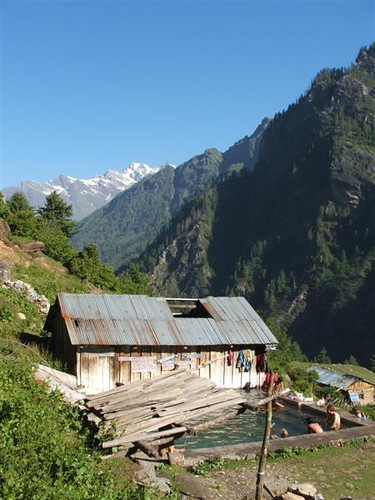
Hot spring with a view of the Himalayas emoji // Tatopani Village, Tamang Heritage Trail, Nepal #nepaliloveyou
Source

Soaking in the hot spring
Jhinu hot spring, Nepal from puncturesandpanniers


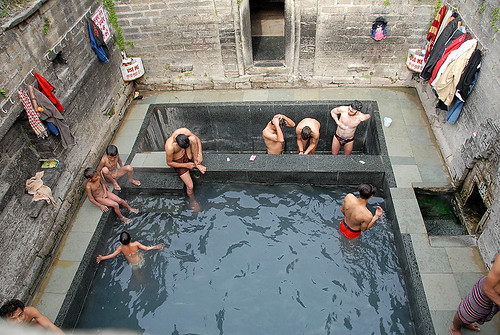
Then over the mountains to Sichuan's Qamdo region, the first following photo picked up from Facebook, a soak in Kangding.

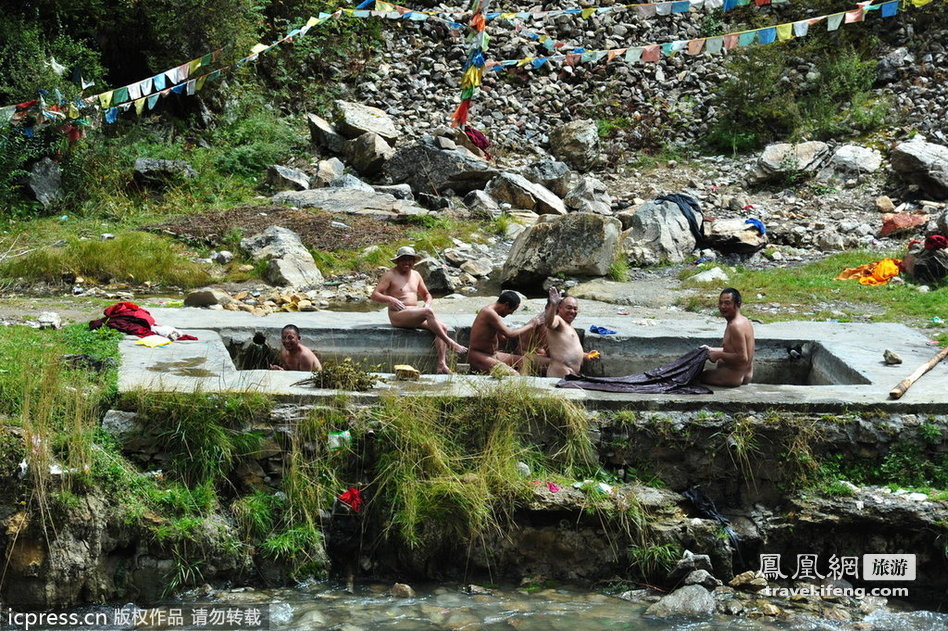
'Filming, playback over yak meat pizza, and impromptu natural hot springs, Tibet'.

If you made it to Dangling you deserve to have a bath at the local hot-springs. Do not think anything fancy, expect the real thing.
They are located in two areas, the first one at Benmu (‘fire bath‘ in Tibetan), rich in sulphur. The other site is at Kabu (‘grassland bath‘), surrounded obviously by grassland. The two springs are approximately 4 kilometres south of the Dangling village, the water level is the same all year round and the water close to the source can reach up to 75 degrees Celsius.
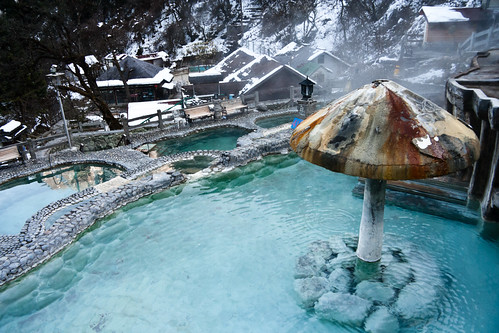
In winter, the enjoyment only gets better as you take the pleasure of bathing in the warm spring water meanwhile you indulge in the snow’s winter scenery.
source

Attraction
 
еще одно святое место-горячие источники кхирганги (2850м) вода прозрачнейшая)греюсь☺️потом-пуховик и шерстяные носки)
amaaask#himachal #himalaya #kheerganga #hotspring
Over to India's Himal section, above the ever photogenetic Kheerganga, below Tattapani.
 
Hot natural springs in Tattapani near Shimla...The healing power of this spring attracts visitors from all over India. The high mineral content of the spring offer unique benefits for the skin ad entire body-mind system. Let's dip our bodies into natural hot paradise! Plan your trip to Himalayas and enjoy hot springs with www.nomadaytravel.com #nomadaytravel #shimla #tattapani #hotsprings #himanchal #minerals #relax #healingpower #bath #nature #instalike #instapic #mountains #river #sutlej #peace #woman 
 
Traveling couchsurfers Kirin, Ben and Tom take a dip in a hot spring bed found in the Pamir Mountains [of Tajikistan] in Jawshargor.


Wednesday, December 24, 2014

Soaking Gods and Goddessess

A heavily updated entry of the hot soaks of Himachal Pradesh:

Following on the trail of the Indian sub-continent side of the Himalaya we have already featured Arunchal Pradesh state, Bhutan, Sikkim state, Nepal and Kashmir. 
South of Kashmir, but north of the Ganges plain lies Himachal Pradesh. Extremely convenient is the existence of a web site featuring Himachal Pradesh's hot springs, which mentions that the hot springs are popular. Most are located in Kullu district.

Out of Kullu
In Himachal Pradesh (or let's use HP) there are only two hot springs outside of Kullu that I could find; at least on the web. One is that of
Tattapani. Located in Mandi district, this hot spring is just beyond 50 km to the northwest of the state capital of Shimla.
'It is located on the right bank of river Satluj at an altitude of 656 meters. This natural sulphur spring is pure and has curative power for various kings of bodily ailments'.
There's a recently constructed place called Hotel Hot Spring Therme and Spa which seems to be the host of the hot spring. Tripadvisor notes that it has four and a half stars. It has a larger, more public pool and two smaller private pools.
From the hotel website:
'Tattapani is famous for its natural hot sulphur spring gushing out at the temperature of 65 degree Celsius near the the river. From the ancient time the local population well known the miraculous property of this water and come from all over the state to take a dip into the sulphur spring: this provides relief to the people suffering from joint pains, fatigue and stress or any type of skin disease and hence has got a great medicinal quality'.

There must be natural public springs as well. Go2india.in:
'Tattapani is famous for hot spring water coming out by the side of Sutlej River. These hot waters came out from different places on the river bed at Tattapani'.
The hot springs are highly frequented on the festival of Makar Sakranti which heralds the suns movement into the northern hemisphere and is considered an auspicious occasion to take a soak. Some recent dips have seen crowds upwards of 25,000 (source)!
'These hot water springs are situated on the bank of Sutlej river. The river is at 4-5 deg. celsius while the springs are at 60-70 deg. celsius. So you have to mix both waters to enjoy the bath'.
View of Hot water springs-

There is though some doubts as toward the future of Tattapani. The Tribune (Jan. 16, 2013):
'Local hoteliers, pilgrims and residents demand the immediate revival of the legendary hot sulphur springs at a higher side of the 800-MW Kol Dam project to save this tiny hot spring healing baths destination from “imminent manmade disaster”.
The National Thermal Power Corporation (NTPC) has asked the local administration to vacate the bathing sites by February 22 to make way for the filling of the dam for the project. This notification has spelt doom for local small-time vendors and pandas, who make a living from managing the bathing ghats for pilgrims performing rituals of “tula daan” and bathing along the bank of the Sutlej round the year'.
Since this info, the hydro project has been stalled due to technical problems (source), but submersion is the most likely outcome in the near future. The Times of India (Jan. 15, 2014):
'The devotees on Tuesday took ‘last dip’ in the holy waters and hot springs of Tatapani situated on the right bank of Satluj River to mark Makar Sankranti, considered a holy day.
Sources said that unusual rush of pilgrims was seen here on Makar Sankranti probably due to the fear of submergence of this site in dam waters. Around one lakh [100,000] pilgrims took holy dip at natural hot water springs at Tattapani.
...
Both the hot springs bath sites will be submerged in the reservoir of 800-MW Kol dam by the end of this year as the National Thermal Power Corporation (NTPC) authority has started filling up the dam.
“We have started the process to fill the dam reservoir from third week of December last year and it will be filled within 300 days. The water will be stored up to the elevation of 642 meters which will submerge the many areas including the hot springs of Tattapani,” Praveen Bharti, spokesman NTPC project at Kol Dam site said. He claimed that the NTPC authority has relocated the hot water springs at a higher location.
Sources said that NTPC authority has already paid the compensation to the local people here for the land which will be submerged in the reservoir water. Kol dam, the flagship hydro-power project of the NTPC shall be ready to generate power by 2014-15'.
Progress? What if they had tried to develop the geothermal potential?

Anyway, the other hot spring in Mandi district is Jeori, located in Kinnaur district (source).

Jeori, source

A soak to worship
A number of hot springs are located not far from each other in Kullu district, near the town of Manali.

On the bank of the Parvati river, are the hot springs known as
Manikaran which appear along a 1 km long built-up strip. The waters are very hot and besides being used for soaking purposes, they are used to boil meals; a Sikh temple here specializes in producing such meals. The religious significance for the Sikhs and the Manikaran hot springs finds it's origins in that the thermal springs were visited by a Sikh Guru Nanak Dev. This had lead to there being a number of hot pools specifically for Sikh.


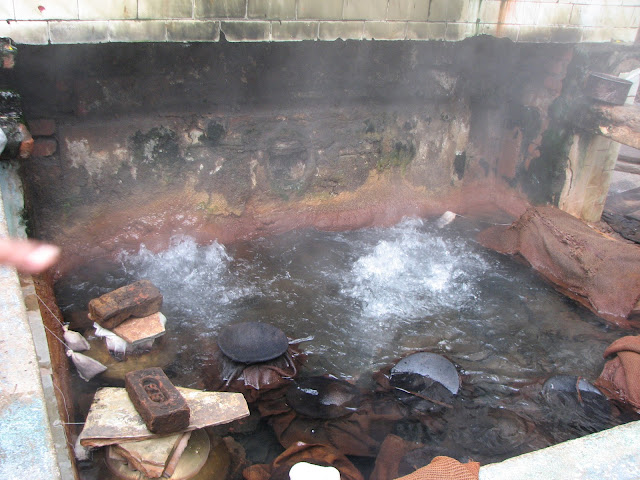
'Hot Water Spring at Manikaran'
By Sanjay. Note the cookers along the edge of the spring.

Besides religious significance for the Sikh, Hindu's also see religious significance in the hot springs, according to this legend:
'According to a legend, Manikaran is associated with Lord Shiva and his consort Parvati. Mani Karan means Ear Rings - it is said that once, while taking bath here, Maa Parvati lost her ear rings in the Kund (pond). When she told it to Lord Shiva, he became furious and looked at the water of the kund with great anger and then thousands of ear rings flowed out from the boiling water and since then the water of the spring is boiling'.
Wikipedia has an extensive listing of the religious significances of Manikaran for both religions.
There are many video's of Manikaran, follow the link to just a few on You Tube.

But besides cooking and religion, there are also soaking sites. A recent (July, 2014) experience:
'When we got to the hot springs, I asked if I could dip my foot into the water. He sent us upstairs to house of worship. On the second try, he pointed out the men’s and woman’s bathing sites. The men’s site was out in the open and anyone walking by could look in. I got into the hot spring water and posed for some pictures. When I got out, I asked Kim how her experience was. She told me that she left the women’s area. After getting past the door, all of the women were bathing in the nude. She got out of there without dipping even a toe in the water! I told her I would have traded places with her!!
'Pilgrims bathe in the hot springs of Manikaran next to the roaring Parvati River'.

Further Upstream
Besides being a haven for Israeli tourists (source),
Kasol (which is 1 km further upstream from Manikaran) also has a hot spring. Or hot springs. The temperature is said to be lower than that of Manikaran, affording visitors with a real possibility to soak and not scald.
 

It's quite difficult to pinpoint the hot spring exactly. Following are 3 links to photo's of hot springs in or near Kasol, but all looking differently. FractalEnlightenment.com, Shailpanoramio and Yossi. The former though is a private hot spring attached to the Taji guesthouse, more out of town. Apparently there is more than 1 site; there's even a reference mentioning springs on both sides of the river. Though another states:
'Hot water emerges only at one location at Kasol'.
Taking a bath in one of the hotsprings in Kasol #kasauli #hotspring #himachal #pradesh #india

Whatever, there is this recent (Nov. 2013) description of Kasol:
'Kasol is a backpacker’s paradise. This tiny village is inhabited mostly by tourists from Israel which is why most of the hoardings are in Hebrew and even in restaurants, one would find Israeli menus mostly. Kasol is ideal for a vacation if you want to chill in the lap of nature'.
From this photo I deduce that there also hot tub huts for rent:

 My divine treat, a deluxe hot bath.

Naturally
While researching hot soaks in the Indian administered parts of the Himalaya, one of the only hot springs still remaining in it's true natural surroundings is the hot spring of
Khirganga (Kheer Ganga / Kheerganga). Khirganga is located another 12 km upstream of Kasol and can only be reached on foot.

From Wikipedia:

'... the trail ascends further through thick pine forests to the spiritual site of Khirganga (Kheerganga), a meadow at 2960m where Shiva is said to have meditated for 3000 years. The hot springs at Khirganga are extremely important for Hindu and Sikh pilgrims as well as many others who believe the waters have sacred healing properties'.
The end of the journey means a chance to soak in near natural surroundings with views of majestic Himals. 
But only for men. In India, women can't been seen in whatever state of undress in combibnation with water (unless of course it's a Bollywood blockbuster) so they have to be content with the view of 4 walls. Which is a pity if you see the magnificent surroundings.
The name Khirganga refers to white milk, the substance these waters near in colour, probably due to the sulphur content.


'KhirGanga hot springs'
by ohad_katzin. In front the pool for men,
behind the shed for women (with improvised skylight); out of soaking site the incredulous view. Since though, the roof has fallen into disrepair ...

Experiencing the women's soak ...
Closer to Mainali is the village of Vashisht which (like Manikaran above) has many springs covering a wider area. With access to Mainali guaranteed, Vashisht (or Vashist) has become famous for it's hot springs; it's reputed that daily nearly 3,000 visitors come for a soak, though this description mentions it to be a small peaceful village ..... 
As with Manikaran, this Vashisht hot springs have been listed in India's top ten of hot springs.
In common with nearly everywhere in India, the appearance of hot water springs has lead to the establishment of temples, here named after the spiritual master of Rama, Vashishta.
'Inside the grounds of the Vasistha Temple there are two hot spring pools that are free. They can get a bit dirty'.
A real experience:
'... the hot water springs that flow into an area in the village, from the mountains, boiling water, and the smell of sulphur, where they all do not only their washing of clothes but soap themselves all over the men and boys in their underpants, and wash/bathe... then of course the Public bathing areas of which there are three, like open air mini swimming pools, fed by the hot spring water where every Tom dick and Harry lounge and bathe, right by the old Vashisht Temple of which there are a few here,(temples) there are the free common public baths, which look utterly disgusting and unhygienic, then regular baths and the deluxe baths, looking at them I don't think I personally would want to step foot in any!! Particularly as you can be seen from the cafes and guest houses above getting changed...well maybe not in the private deluxe ones but no thanks all the same!!! The Indian pilgrims come to ceremoniously bathe in the hot spring waters and visit the temples here..... '
Obviously this was blogged by a man.
 

What happens over at the ladies? Lael wrote this on myspace:
'I went into the bath yesterday. There were a couple of Indian women and several little girls. The water was really hot. I have a little thermometer attached to my bag and I took it in the water with me the first time, 112 degrees. I got in and out, my feet feeling more and more cooked each time and playing with the little girls. Indian tourists from other parts of the country came and went, just dipping their feet into the water for blessing. Public places in India are usually filled with men so it was really refreshing to be around all women. I will be headed back there in the evening when the weather cools off a little bit'.
More from the women's side of the springs from Kara and Max:
'Hot springs! Vashisht is blessed with an unlimited supply of scalding hot water, and the townsfolk are appropriately grateful. The source of the springs has a temple built around it where locals come daily to wash and pray. Foreigners are also welcomed into the temple's relaxing sulfuric pools. Inside the temple there are two pools for men and women separated by an ancient stone wall. Kara was pleasantly surprised to see that the strict taboo against nudity dissolved into the steam of the women's bathing area. It was the first time Kara ever saw an Indian woman showing her full skin in the 11 months she has spent in India. Go women of Vashisht! she says. Max was disappointed that the men's pool was in full view of the street above, and so he could not enjoy full relaxation in his birthday suit. Both pools are piping hot and it is a test of endurance to submerge one's full body in the holy water. We always left the hot springs completely rejuvenated and calm. Unfortunately photos are prohibited in the temple...'.
Unfortunately this, however it's not the only such amazing experience.
Ashley in a blog adds to what I believe is also a hot spring visit to Vashisht:
'The female body is sacred in India. They do everything they can to cover their bodies and sometimes will be married for years before even their husbands see them nude. ... As I entered the hot spring I couldn't believe my eyes. There were about a dozen nude women, all shapes, sizes and ages, laughing and slashing about, scrubbing each others backs and just having a grand old time'.
The fascinating blog entry ends with self-reflection:
'Bathing with those women in the hot springs day after day I felt my attitude and self image shifting. Being a young woman growing up in American culture you have societal pressures placed on your body image. I never thought of myself as being insecure about my image but I found myself subconsciously judging others. Not on purpose, but just as a result of our societies labels on beauty. I always wanted children, a lot of them, but I did worry about the toll child baring would take on my body. What I saw in those hot springs was pure, natural, unmanipulated beauty. Everyone of them was perfect and there was not even a glimpse of judgment or shame. It was so inspiring and erased and fear of aging I may have had. Their confidence was beautiful, their smiles were beautiful, the love in their eyes was beautiful, and every curve on their body was absolutely beautiful!'
As is the description.

Besides the public pools,
HP Tourism Development Corp. is said to be running
'turkish style baths'
with more private facilities. Their own web site fails to mention this .... This site mentions that it is due to a dispute between
'... the villagers and the Himachal government regarding payments and the water supply that the villagers believe to be theirs by right. In the meantime, the only place for a hot soak is in the bathing pools of Vashisht’s ancient temple (free) which is far more atmospheric anyway'.
Such is the fame of Vashist, that the Tribune (7 Dec. 2008) even mentions it's a significant place for local Gods and Goddesses:
'Vashisht village is not only known for its hot water springs and the' Vashisht rishi temple, but also for the sanctity of the shrine where the gods and goddesses of Kullu valley visit to take a holy dip'.

Sunday, June 29, 2014

A Clear Sighted Soak?

Sichuan contains China's border between the lower lying areas of China proper and the mountainous entrants to the Tibetan plateau. A quick look at the map shows high mountains cut by deep valleys as the Indian sub-continent pushes further north.

In looking into the Himal hot springs of Sichuan, the autonomous prefectures of Garzê (or Ganzi) is covered in this pretty extensive section. By far the biggest prefecture of Sichuan province, Garzê was until early 20th century part of Tibetan Kham. Firmly in the mountainous terrain, the local majority Tibetans are spread over 18 counties.

Sniffing
First and foremost amongst these, is Kangding which serves as the administrative center of Garzê autonomous prefecture.


Situated 5 km from 'downtown' Kangding is the hot spring of Erdaoqiao (Erdao for short):
'The grounds are quite expansive and encompass many different bathing areas—a great place to soak away the aches and pains of a day's hiking or horse trekking.
Baths vary in temperature, from 38°C, 40°C, 42°C, up to 50°C (100 ~ 122°F) and if that's still not hot enough, there's also a sauna'.
A first hand experience:
'The first sniff of the spring had sarah imagining a bacon and egg sandwich but unfortunately the rotten egg smell of popping sulfuric gases was emitted from a pool like enclosure where our hot spring lay. All the surfaces were particularly grimy and the roof was encrusted with ice, the pool was covered by a thick layer of mist and the colour emitted was akin to the lights of a midnight dip in a swimming pool. Despite the -6 degree temperatures we smartly lowered ourselves into the hot spring and held our heads above the water. Before long Sarah noticed that my silver necklace had turned to a copper colour and rapidly changing to black. We weren't sure of the concentration of acid but sarah uses it in the workshop to blacken metal and if it touches her skin she is supposed to hop under the chemical shower'.
Tripadvisor has a page on Erdao, doesn't look too appealing. But the following picture could also assist (let's hope the source correctly identified this as Erdao ....).


Other sources for info on Erdao hot springs but then in Chinese can be obtained here.

Laoyulin is also mentioned to be 5 km from Kangding and the excellent Dr Rock blog by Micheal Sydney mentions the existence of a hot spring and possibly Micheal revisits the same hot spring 4 years later:
'Just a few brick cubicles covered with cheap corrugated green plastic'.
The area is becoming more of a destination for trekkers wanting to visit Sichuan's highest mountains known as Gongga (see below). An article by the China Daily gives more insight in local development combined with tourism espousing on the benefits. The 2008 article suggests a local will improve the soaking site.

Further away (21 km) from Kangding is the national park of Mugecuo. Wikitravel mention
'Dip your feet in the medicine pool (actually a hot spring) for a small fee, or have an egg boiled'.
Chinatravel notes the existence of more than 20 springs and
'Boiling springs here can be categorized into many kinds, such as Buddha Spring, Clear-sighted Spring, Stomach-improving Spring, and Feet Bath Spring, etc. The water of Buddha Spring has no peculiar smell; it is good for heart and eyes if infused with tea. Clear-sighted Spring, Stomach-improving Spring, and Feet Bath Spring are respectively helpful for the treatment of eye disease, tummy bugs and rheumatism, as well as for health keeping. From ancient times till now, the spring water here is reputed as "divine Water"'.
Even more hot springs are supposed to be apparent according to the blog entry by Memories on a shoestring: 
'We had a light meal at a hotspring area. Apparently Mugecuo Scenic Area has nearly 100 hot springs which have different curative effects. I did not try the hotspring. It cost RMB20 to enter inside. Each of us bought an egg to eat. It is half-boiled egg for RMB3'.
The blog entry comes with many photo's of the scenic area. From the photo's of the lunch break one can see that quite an effort has been made to upgrade these to afford visitors a soak if only of the podo variety ...


Odorless
In Garzê county one can find the hot spring of Dargye which has alts in the name of Rongpatsa, Rongpaca, Rongpatsang and Yartsa. Located 25 km from the county headquarters, it is near the gompa with the same name and the village of Rongbatsa.
Daniel Winkler describes the place as follows:
'Odorless hot water wells up with bubbles from the white granite sand ground. Dig in your feet and you will enjoy a bubble bath. Alas, the temperature of the pool is slightly below body temperature (35°C / 95°F). However, the clear water and the magnificent view of glaciated mountains make this spring a special treat. May be I should mention that this is the men's pool. There is also a woman section down below near sinter outcroppings'.
He adds a nice picture which though the same place as below, it clearly gives a different feeling to the soak.


'Shedding their robes, monks from the Dargye monastery
in Sichuan wash in a hot spring'.
Source.

Strictly
Lithang (Litang) county, to the west of Kangding contains two less well-known hot springs.


Sori hot spring is included in Daniel Winkler's hot spring
overview. Then there is most probably this experience:
'That was when I noticed local Tibetans in a hot spring across the river. I wandered over to check it out and found the water temperature to be just right. The extremely hot spring water had been mixed with the icy river water. There were several pools—the ones farther up the trail were strictly for womenfolk, so I stayed with the men. Tibetans don't bother with bathing suits—and neither did I—much to the amusement of my companions'.
Possibly not even Sori hot spring, but nonetheless a nice description of a good soak!

A little more clarified is the hot spring of Batang, 5 km west of Lithang.

'There are a number of places to bathe there, but don't expect to be a wash in nature - the hot water is piped into white - tiled tubs'.
Elsewhere this web site makes mention of many hot springs.

Avoid
Daniel Winkler's
hot spring list leads to another two soaks, Dzogchen (Zogqen) in Dêgê county and Rubu Chaka (Rubuchaka and variations in spelling of this) in Daocheng county. The former is heavily mentioned on other websites as well. The Daocheng Things to See section of Chinabackpacker mentions
'It was reported [in 2003] that many cockroaches were found in the bathroom. Avoid going there during the night when cockroaches are extremely active, and can be found everywhere, even in your clothes and shoes. Believing in Buddhism, local Tibetans do not bother to eliminate them'.
It's unclear whether this is advice to stay clear or the opposite.  
Elsewhere a more recent photo shows a different more developed picture of what Daniel might have experienced.
And this hotel booking site shows that apparently the good times of cockroaches at night have passed ...

Hottest
The website of the New Long March described a trip from Zhongdian into Yunnan. As they cross into Xiangcheng county, Sichuan they come to the village of Ranwu, which has a hot spring which was
'developed at great expense but in very poor taste. ... The spring is only a few meters away from the pools, the smaller of which is the hottest hot spring I have ever used in China. The water was formerly monopolised by a local Living Buddha; after he had washed, the water flowed into a lower pool which the locals used'.
'Ru Buchaca named because place names spa, Ru cloth Tibetan word for "friend", "Chaka" Tibetan is the spa, alias Charles co Wenquan Ru. Ganzi is a well-known high-temperature steam springs, hot springs at the outlet water temperature is 68 ℃, up to 80 ℃, flow rate up to 7000 m3 day and night, hot springs water is clear, colorless and odorless, contains no sulfur, drinking, with physical fitness, longevity, medicinal, regulating endocrine function, treatment of skin effect'.
No. 2 is the Best
In Luding county (100 km from Kangding) one can find what seems to be Sichuan's most frequented hot spring for the mountainous part of the province. Located near Sichuan's highest mountain, Gongga (Minya Konka) and in China's biggest glacier park (?), are the hot springs of Hailuogou which for the convenience of foreigners has been (re?) named Conch Gully.

Hailuoguo's no. 2 (source: RichardLuyy)

Hailuoguo even makes it to the top 10 hot spring resorts of China (source). 

Despite all the claims to it's naturalness the springs themselves are part of a tourism set up such as the Gongga God Hot Spring Hotel. In total there are 3 hot springs in Hailuogou according to the article entitled 'Attractions: Four unique hot springs in China', one of them being Hailuogou.
That said it are so-called camps at hot springs 1 and 2 that attract most visitors.
Sabrina while blatantly copying on her blog copies:
'... most of the visitors favor hot springs in No.2 Campsite because they are rustic, with more natural taste'.
In this article discussing 'green' tourism in Ghanzi prefecture, the park around Hailuoguo is mentioned a number of times for the lack of 'green' planning.
'Several hot-spring resorts inside the park have tacky buildings and decorations totally alien to their setting. "These are truly ugly to me," Hitesh Mehta, a Canadian landscape architect, said in his presentation.
"They are beautiful," he said, pointing to the photos of traditional wood houses seen at Moxi Town just outside the park. "Unfortunately there are not many left."
Facing the criticism, Xiao Feng, director of the administration of the park, explained that these problems were mainly caused by several independent tourism operators inside the park and their bad management. At present, the administration is purchasing their property back to solve these problems.
However, many conference participants expressed doubts as to the local authorities' humble attitudes towards investors from the outside world.
"They spoil investors for sure," Chen Xujun said. "Most of them become indifferent to the local environment and welfare of the local communities."'
Then there is this info:
'According some doctors, the boiled water has high medicinal values, such as curing skin disease and arthiritis, and eliminating fatigue'.
Fire
Another county in Garzê with geothermal features is that of Danba. Also known as Rongzhan, the main place to visit for these features is the mountainous area of Dangling. Chinabackpacker:
'The hot-springs in Dangling are located in two areas, one at Benmu which is the rich in sulphur, and means 'fire bath' in Tibetan. The other site is at Kabu, encirlced by grassland which in Tibetan translates as 'grassland bath'. The two springs are approxiamately 4 kilometres south of the Dangling village, and the water flow never cease all year round, day and night the liquid output amouts to about 3000 tonnes. The water close to the hotspring mouth can reach up to 75 degrees Celcius. Chemical tests show that the springa belong to the type neutral, heavy sodium carbonic acid with healing properties. It contains many minerals that are epecially beneficial to the likes of headaches, stomach and intestinal diseases, diabeties, arthiritis. Surrounding the hot-springs is a picturesque primeval forest, sitting in the hot-spring bath, washing away the weariness from the travelling, indulging in the most that the hot-spring can offer. And when it's winter, the enjoyment only gets better as you take the pleasure of bathing in open snow: indulge in the winter scenery while bathing in the warm spring water, and if you are lucky enough and it snows, you can slowly relish yourself with the spectacle as snow flower fill the sky while you let your body relax in the warm bathe'. 

Source Translated with google, you make sense:
'September 22, 2012, known as the "natural bonsai" Yak Valley Scenic Area is located 21km southwest of the county, Ganzi Tibetan Autonomous Prefecture in Danba East Valley township, road side there is a very famous natural hot spring baths, but also the rare nude bath one place'.
And though it looks idyllic there are always qualms. Timemaker:
The first stop was a natural hot spring by the road. The hot steam was perfect for warming my frozen hands. I didn’t want to soak in the water though; I read that sick locals like to visit hot springs. It was especially uninviting when the driver told me you can cure STDs by soaking in the hot spring for a week'.
It probably reflects more on the writer as especially in Chinese there are many good references. 
It is well and truly Tibetan country here so you'll see complete encampments during season of locals enjoying these springs. 

Note that if I am correct just behind the hot spring pictured a road has been laid ... Drates. A paradise lost?

Thursday, June 16, 2011

Delineation?

Fringe culture
While highlighting the hotter soaks of the Himalaya one will always come up to the fringe of what should or shouldn't be included. On the one hand I am very much inclusive, on the other hand it's by no means my intention to provide background to all of Asia's hot springs. Well that's what I thought back in 2011 ...

Gansu province, north west of the Tibetan plateau forms one such fringe. It being on the cross roads to the steppes to the north, the Gobi to the west and China proper to the east. With this information it's quite difficult to discern what would belong to a hot soak of the Himal and what not.

Anyway an ultimate soak is a soak in natural scenery irrespective of geography, administrative division and social culture: a good soak may well be in the middle of a desert or a city for instance.


Gansu
Gansu province is probably a less visited province and as such less well-known. However it contains a highly diverse geography as well as rich culture.

Not really famous for it's hot springs, there are though quite a few, some still untouched by 'progress'.

That said the Tianyuan Hot Spring Hotel in the province's capital of Lanzhou is not one of them. Looking like anything but a natural soak, the reviews on tripadvisor are not too bad. However the existence of a hot spring does not seem to be the reason why reviewers add their opinion of this hotel.

Tianshui environs
Another city, Tianshui, is noted for the many hot springs around the city (source), while Chinatravel describes the area as having
'abundant geothermic hot springs'.!
Among the hot springs near Tianshui are Mapao (just the single source), Maiji, Qingshui (references for both, see Chinatravel, above), Jieting, Baisha (source) and Wushan. As ever it could just be a single hot spring with many different names.

Jieting (or Maijishan) hot spring are referred to as having 19 kinds of chemical trace elements and the
'first choice for treatment, leisure and holiday'.
There are some photo's of a not so appealing Wushan hot spring. More info can be found here:
'Wushan Hot Spring lies on the Wenqian village thirty kilometers southeast to the urban area of Tianshui. It is referred to as a mineral spring. The spring enjoys an outsized total area with eleven spring mouths and 700 plenty of water volume every day. The spring is of recent water and therefore the water temperature is from 38℃ to 40℃'.
Warm spring
North of Tianshui is the prefecture of Pingliang. Jianchuan is the place to take the waters here. However it may be disputed whether or not the soaks here are hot. The site once used to reveal that the spring at the source of the Liuhu is only 17 degrees, which in winter can be regarded as tepid, otherwise that's nice and cool. The info continues and refers to Zuo Zongtang adding an inscription near the springs entitled 'Nuanquan', warm spring. Chinatravel adds:
'The surroundings is gracious, beautiful, convenient, and informative. The hot spring is explored in 1971, with a constant temperature 38.2℃ all around the year. It has 13 active microelements. Having bath in hot spring can keep the human body clean and moist, and has health-care functions including accelerate blood circulation, practice the cardiac muscle, protect the heart, help digestion, get rid of fatigue, heal cardiac vein and skin diseases'.
Unfortunately the web search also revealed mentions of unveiled greed:
'There are about 1,190 million cubic meters of underground water and a hot spring 10 km to the west whose temperature is between 30 to 36 degrees centigrade; both of them are just waiting for exploitation'.
To freak or not
In Gannan autonomous prefecture, a tremendously mountainous area wedged into Qinghai province one can find the hot spring of Zhajiang (or Jiang Zha) located in Luqu county. Also referred to by the name of the nearby Buddhist monastery of Langmu.

Langmu hot springs, blogged by Nswink13:
'There were two hot springs. We weren't going to get in because we didn't have our bathing suites, but we allowed our bras and underwear to suffice. This was the only photo we took since most of the women in the water were totally naked.
Sitting in these hot springs are supposed to be really good for your skin. It was neat to sit right by the mountain where the water flowed out from. It was so hot I was sweating. It felt like a scorching bathtub. We had been in a hot spring in Yanshou earlier on in the vacation; however, after experiencing this one, I am pretty sure that one was fake. They were more like hot tubs'.
The poorly reachable hot springs (this Chinese website mentions more than 40) has saved it from both heavy development as well as social mainstreaming. Hattie25 describes a visit to the place and was 'surprised':
'As we stepped into the females’, the wet warm airflow embraced us immediately. Lots of naked local Tibetan females with their children were sitting down the bottom of square pool silently, water could only immerge an adult’s instep, My godness! This is the famous hot spring of local’s legend? Really freaks me out!'.
That's what traveling is all about, finding and experiencing new things (well what's new about this?) without being biased.


'Jiang Zha hot spring, you dare to in?'
(source, non working)

Anyway is you can observe the hot springs are rustic and cut into a cliff face. And one not need to be schocked as there are also other soaking places. Gotomessland.com mentions (with photographic evidence) that the indoor pools are not quite clean.

Restore Function
Nearby, in Dingxi prefecture Tongwei hot spring
is known as Gansu's province's sacred spring. Elsewhere it was (link has gone) mentioned that:
'The hot spring water is natural mineral water with abundant fluorine, silicon and radon. The spring water can promote one's appetite and supply the necessary microelements in the human body.
It can also help cure one's chronic gastritis and enteritis, improve the metabolic process in human body and prevent premature senility. Therefore, the spring water is also called "youth mineral water"'.
Not bad? Source translated:
'Long went to the location on the Shinsen --- Tongwei, about 2.5 hours away, all the way to enjoy the beautiful rural scenery, the fresh feeling of nature, while the hot springs to relax tired mind and body. Shinsen is comfortable in the bath to enjoy, you can make the skin shiny and smooth, fit and healthy. When the temperature is 34-36 ℃, the nervous system has a significant sedative effect,37-39 ℃, the increase in gastric secretion, gastric motility to enhance, accelerate blood circulation. 42-44 ℃ when the strong sweating, excretion of metabolites, co-ordinating body to restore function, absorption of various trace elements beneficial to humans'.

Updated May 2014