Showing posts with label 温泉. Show all posts

Sunday, August 5, 2018

Limits

kunza_dee at Gasa 

The sky isn't the limit🍃🍃🍃
Let's start with the Himalaya's proper, above Bhutan; following Nepal, then a double bill from India's Vashisht hot spring temple.

conrad.u at Jhinu:
Relaxing after a long trek in a hot spring ☺️🏔#himalayas #himalaya #nepal #annapurna#annapurnabasecamp #📍 #travel#travelling #vacation #visiting #traveler#instatravel #wanderlust #trip #holiday#lifeofadventure #travelgram #traveling #me#jungle #mountain #river #hotpool#hotspring #gopro #hero6 #black

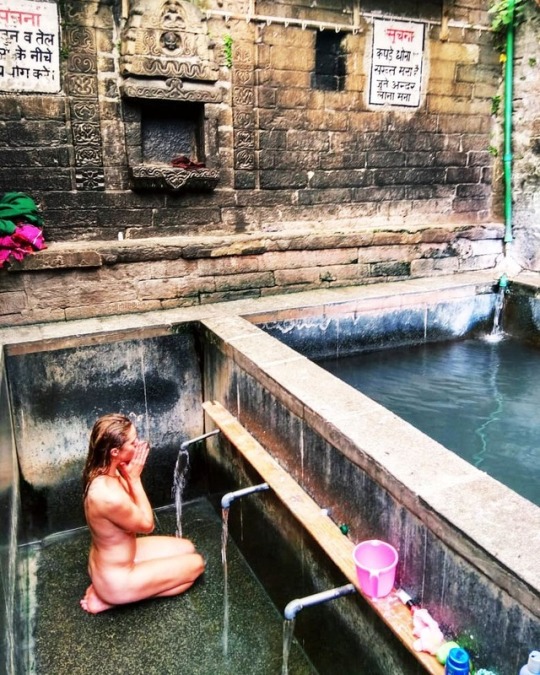
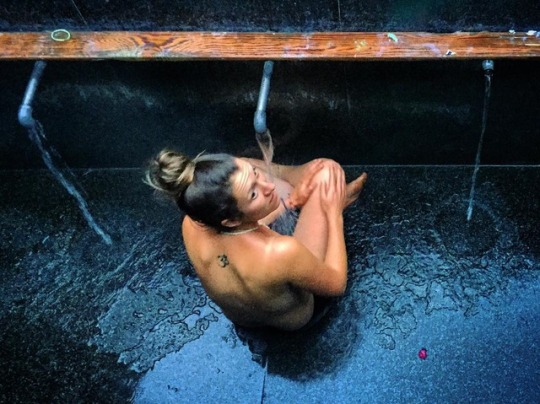
Чем известен Вашист, так это своими горячими серными источниками, с кипяточной водицей неустанно текущей из труб. Ванны находятся на территории Темпла, и конечно же раздельные для мужчин и женщин. В бабской купальне обычно аншлаг, шум, гам, толкотня. Но мне посчастливилось там оказаться в сообществе всего двух женских особей, и даже сделать фотографию, что в обычном раскладе "аншлага" не вышло бы.⠀Омовение тушки в серной кипящей водице очищает и окрыляет, ощущение что сменил ты кожу и тело блестит и сияет!...#вашист #горячиеисточники#серныеисточники #темпл #горячиеванны#сернаявода #живыеисточники#источники #источникижизни #источник#источникжизни #источниквдохновения#источникивдохновения #мояиндия#гималаи #омовение #очищение


Hittin the baths #hotsprings #showerseries #bathroomseries #shower #bath #washing #female #figure #beautiful #india

Executive

#tajikistan #yamchun#wakhan #pamir #hotspring #relax#travelgram #travel #bibifatima #nature#hotshower
On the northern flanks, Tajikistan has been a boon for soakseekers. Above in the Wakhan, Bibi Fatima HS, below halfway between Khorog and  Ishkashim the Garam Chashma hot spring.

ワハーン回廊沿いにある温泉地、ガラムチャシマ。乳白色の温泉は皮膚に良いらしく、湯温も丁度よく、歩き疲れた体には最高のご褒美でした。実は温泉大国タジキスタン。ワハーン回廊沿いだけで5ヶ所ある。3つは行ったが残り2つは体調不良の為坂道を登れず断念。#タジキスタン #パミール高原 #ワハーン回廊 #ワハーン回廊徒歩旅 #温泉 #ガラムチャシマ #garamchashma
gobibike
Another major perk of the Wakhan Corridor was the roadside natural hot springs! Jan and I cycled with Celine and Chantal for a few days and had a relaxing spa break mid morning, overlooking the Afghan valley. We all got a little sunburnt, but I was thrilled to finally use the bikini I have been carrying around for five months! Thanks @theyccrollin for getting out into the cold wind to take the photos#gobibike
The experience from the gobibike blog:
19th June
Between Eshkashem and Langar (on Tajik side). 64k
We cycled for a couple of hours along beautiful valleys and came to a natural hot spring right by the roadside. There were a couple of young boys in it, swimming in the shallow pool totally naked, and we debated a little if we could go in too, and I made the executive decision that we really should; one doesn’t find hot springs very often in the UK so I felt it was an opportunity not to be missed. It was rather fun! The boys quickly scrubbed their hair with soap and hopped out, and at last that bikini I have been carting around for five months was put to use, and we lazed in the lukewarm water, looking across the valley to the Afghan shores, towering mountains overhead, the blazing sun beating down on us and the wind picking up behind us, and discussed quite a range of topics and passed away nearly two hours before dragging ourselves out into the cold breeze to continue cycling.
Views


aikoperisha_ at Teploklyuchenka-Ysyk Kol
#спсзадень#эжежезде#АксууКенч2018
A couple from the northern plains and mountains. Above Kyrgyzstan, following Mongolia and the a far shot from coastal China.

uh_genie at Tsenher (Mongolia):

온천으로 피로를 풀었습니당. 맥주는 나의 칭구 #몽골 #여행 #온천

mattworek at Nanshan Bamboo Forest (Changzhou)
#hotspring #china#bathwithaview #bambooforest #forestview#relax #explorechina #travel #golocal
Often 
kamoutdoors at Pushchinsky
Пущинские термы 😊
Photo's from Kamchatka usually show snow, so I've done my best to get a few (more or less) snowless pictures.

Малкинские термальные источники. В Петропавловске-Камчатском 13 градусов тепла, а там уже 20🤟🏻 #kamchatka #gor_kamchatka #hellokamchatka #kamchatka_repost #fareast_russia
Ребята! А есть ли тут любители бани? Поделитесь знаниями о банях в Санкт- Петербурге) больше интересуют дровяные, а вообще с удовольствием почтаю ваши рекомендации:) какие вам больше нравятся? Где находятся? Где пар хороший ? Где цены вкусные?)Жду комментарии..)#бани #горячиеисточники #камчатка#kamchatka #peninsula #баниспб #спб#spb #traveloften #summer

Tuesday, August 11, 2015

At a high

Top of the world
What follows are those hot springs located in and around Lhasa, Tibet's capital which were originally in another posting, but changes / changes.

Superlatives are used to describe the hot spring of Yangbajing (or alternatively Yangpachen) located in Doilungdeqen county, 87 km north of Lhasa. And arguably one of Tibet's most well-known.
This in part is due to access; the hi-speed railroad to Lhasa passes here and there is a station, enable dieembakation. Even Micheal Pailin made it here, so why not join in?

The Yangbajing springs are massive and are stated  to be the highest altitude springs in the world.
Included as one of the World's Most Amazing Hot Springs, this site is less direct:
'The Yangbajing hot springs field is at an altitude of 4290–4500 m which makes it the highest altitude set of hot springs in China, and possibly the world'.
(Btw, Conumdrum hot springs (CO) are the highest in North America at 3,400m while Boliva's Termas de Polques hot springs are notched at 4,400 (close ...)).

Others have included Yangbajing as one of the 10 Coolest Places to Swim, which seems a bit odd; though the temperature may be cold, the water is hot.
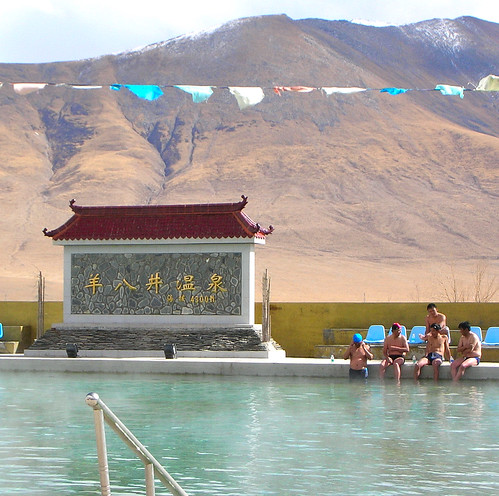

'Hot spring bath at 4600m'.
By Zuzi Griffiths. Though electricity was won since the 1970's, these pools were only filled in 1998 (1).

The Yangbajing hot springs field is extensive. It apparently covers a large area (40 km2, no less, though wikipedia notes 20-30 km2) and besides including the bathing complex (see photo) and geysers, it is also a source for geothermal energy, enough to sustain half of Lhasa so is learnt. I even managed to find an internet entry on Duoji, claimed to be the expert driving the geothermal power project of Yangbajing.

The uniqueness is further demonstrated with this tale of it's existence (from Magic (!) Tibet:
'It was said that long time ago, before the sky and the earth was separated, the whole world was in total darkness. People living at the foot of Mt. Nyainqntanglha were suffering. One day, a golden phoenix flied to the area, determined to create brightness by sacrificing itself. It threw one of its bright eyes onto the ground. A fairy caught the eye, and then a bright lamp arose in the air. Snow capped peaks of Mt. Nyainqntanglha appeared; grassland like huge carpet emerged; happiness came into Tibetan people. However, a greedy man near Yangbajing coveted the lamp. He took a witch man’s idea to sharpen his hatred into an arrow to shoot the lamp. The lamp was broken then, the pieces of the lamp dropped onto the ground, turning into hot springs and burned the man to his end. People said that the hot springs were the fairy’s tears'.
Rabbit writes on clickandrender an expansive piece on Yangbajing including many photo's.

The aforementioned wikipedia reference mentions that the hot springs bathing site goes by the neme of Holy Medical Spring Resort which
'... has both two indoor swimming pools and one outdoor swimming pool'. 
You dog?
The Dezong hot spring (Maizhokunggar county) contrasts greatly with the prior featured hot spring. 
Devoid of development, the setting is rustic and accompanying this is the fact that it's mostly frequented by locals whose disregard for formal attire provides outsiders (surprise, surprise mostly males) with a carte blanche to highlight their possible ultimate dreams.


For instance, this website states the following:
'The hot spring pool is divided into two zones-male pool and female pool. Though a flaw on the wall separating the pool, nobody would peep for lust-people there are quite pure.
...
Man and women bathing together with just a low stone wall between Bubbe bath and medical-worth are another TWO characters of Dezong Hot Spring. Somestimes, local pet dogs are lying by the pool 'appreciating' the naked tourists.'
What a load of info. Tibetan's have no lust? Local dogs do? Or do they really appreciate naked tourists?

Tibettravel.org's dogs appreciating?

While discussing Dezong (sometimes spelt as Dezhong), China Service Mall asks the following question:
'Is there anywhere else you can bathe in curative, calcite and tussilago-infused waters while gazing upon the most rugged, photogenic landscapes on the planet?'
That seems a weird question, when there are more than 1000 other similar hot springs and the first randomly chosen hot spring featured on this site acclaims to the same!
They continue with the description of the hot spring:
'The Dezong Hot Springs are arranged in simple, rustic fashion, divided into a men's pool, above, and a women's pool, below. 40° C, jade-colored spring waters cascade 20 meters into the resort's pools'.
There was evidence that bathing in Dezong has been taking place for over 1400 years, which must be something of a record.

Mates
One of the more difficult factors when researching hot springs in Tibet is the lack of info foremost and the general confusement concerning the name. Often referred to as Tidrum (or Tirdum, Tridum, Tridom, Dedrom, Drigong) hot spring I believe may well be the same as the above. Pictures though are not conclusive. Experience though in both seems great.


'This is a view from the outside of the hot springs at Tidrum Nunnery'.

'Tidrum Nunnery was home to a hot spring. ...And not just any hot spring. These pools were world class. Gently carbonated, just over 100 degrees Fahrenheit, open to the stars—they don’t get much better than that. Joining eight or ten naked, intoning pilgrims, my attitude about the guest house quickly shifted. What at first seemed like a hardship post was in fact heaven.
My springmates stopped chanting long enough to warn me away from the patch of nettles growing along one edge of the pool. One part of me knew I shouldn’t stay too long, but another part was loving it enough to consider settling in until I simply moved on to my next life and could let my body be taken down the road for a proper sky burial.
After about fifteen minutes I looked up at the lone decoration, a framed photograph of a monk. Someone tried explaining the significance of the picture. Or perhaps he was telling me that my formerly white skin was looking lobster-like. I chose to see the one-way conversation as a sign that it was time to go. My sleep wasn’t half bad'.
Elsewhere Tibetwildyakadventures states:
'Concrete free, these hot springs are truly curative and relaxing. Men and women have separate bathrooms for changing. The best part is the fee. If things haven't changed when you go, it's only 5RMB per person to enjoy the hot springs and the nunnery is free. Some nunneries will offer free accommodations in certain circumstances. Whatever you do, don't get rushed by your driver or guide. This is a place to relax, forget about your watch and soak up the healing waters'.
Hillbilly hollar even introduces us to the aspect of professional soakers:
'Many professional soakers from all over Tibet come and stay for days. A room will cost you $5, and if you can't speak the language than it will be an instant noodle night for you. There is plenty of hot water'.
Where does one apply?

The men's pool at Tidrum by Jill and John. Most probably taken by John:
'To me it was just a lovely hot soak on a cool afternoon'.
More recent info, the Shambhala Serai Tirdom hotel recently opened up and describes itself as a spa / hotel:
'Shambhala Source has 18 rooms overlooking the canyon ravine, hot springs and meditation caves. Six “Tantric space suites” are two-story accommodations with a bathroom featuring a hot spring tub on the first floor with seating, and bedroom with private balcony overlooking the ravine on the second floor. Six other rooms are standard size and also feature a hot spring in the bath. Six more rooms have unsurpassed views over the canyon but no hot spring water directly in the room. All guests may use the open hot spring pool which all rooms overlook'.
A tripadvisor review:
'We stayed 2 nights here. It's a beautiful spot in a river gorge and has mens and womens hot spring pools which are great if your are not too modest. Rooms are marginally clean enough and hot water was no problem. Service was weak and no one speaks English. The restaurant food can generously be described as simple but adequate. Not a great place but probably much better than monastery guesthouse alternatives'.
Aerial View
Shambhala by redcapitalbeijing

Profiteering
Xungbara Qu gets one mention, that as a mini-hot spring in Doilungdeqen county (1).
The mini part lies in the lower temperature possibly. However drinking this water cures stomach aches and skin diseases, bathing stops itches. The same single source mentions that the curative qualities of the water has lead to the establishment of a pharmaceutical plant nearby
'... which are making good profits'.
Extensive search resulted in another find, Qusang hot spring of Doilungdeqen county. Or is it Quisang, Qui sang, Qub sang, Qusan or even Chu sang? Possibly the Qu could also refer to the Xungbara Qu of above. Geoinfo adds:
'Qubsang Qucain is a hot spring(s) and is located in Tibet Autonomous Region, China. The estimate terrain elevation above seal level is 4551 metres. Variant forms of spelling for Qubsang Qucain or in other languages: Qubsang Qucain (bo), Qiusang Qucan (zh), 邱桑曲灿 (zh), Qiusang Qucan, Qubsang Qucain, qiu sang qu can, 邱桑曲灿'.
Whatever, I did find this recent web text elaborating on the bathing habits at Qusang:
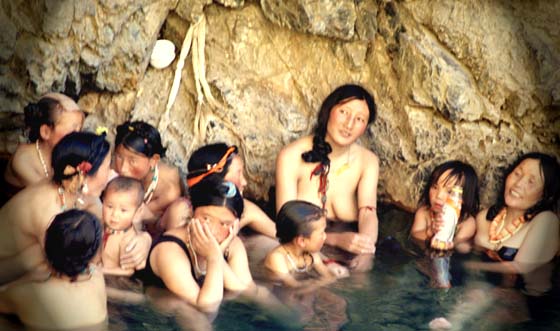
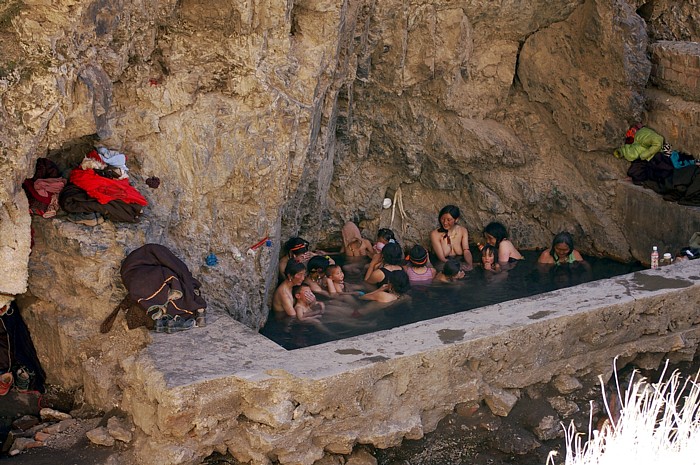
'Women were all wrapped in thick padded gowns and waiting outside. They just cared about when they could have a bath and paid little heed to us. When it's the time for women to take the baths, and no male are allowed to come into the hot spring. Males and females bathe in 6-hour turns and a bell notifies them when it's time to switch'.
Just one of the three photo's of Qusang hot spring. No subtitle.

The website from which the photo above stems from, has a photo essay entitled
'西藏神奇的裸浴温泉 [Tibet's magic nude bath spa]'
Qusang would be Tibetan for quality water (source) which makes more sense.
Other info includes the fact that this hot spring is only 60 km from Lhasa.

Less info on more springs
Other hot springs in Maizhokunggar county are Paoshang and Riduo. Riduo seems to have certain unknown qualities:
'... is famous for its magic water functions which can improve people's health, beautify skin and adjust blood pressure'
as this website claims. 
But there's more:
'The water temperature at the spring source of Riduo can reach as high as 81C, but in spite of that, there is a harmless little worm living in the water which the locals call "holy worms".
In Rutog village, Maizhokunggar county, one can find the Rutog hot spring!
'[Rutog] is famous for its magic water functions which can improve people's health, beautify skin and adjust blood pressure. Endless visitors and believers come to the hotspring every day for bathing and pilgrim'.
This quote though seems to have partially disappeared from the internet, at least the latter part.
What I did find was that Rutog's springs now are directed to a bottling plant.

Purku hot spring is another hot spring most probably located in Lhasa, the reference at least refers to Nyemo, a county in Lhasa prefecture. This article sums up the hot spring as follows:
'The hot spring is in valley with lofty mountains rising to the sky on both sides. The Yarlung Zangbo River is compressed into a narrow curve at this point. There are many hot springs. On the opposite bank of the river is Tare Village, and there are several hot springs on the cliffs to the west of the village, where villagers have hollowed out several stone pits for people to bathe in winter. Purku Hot Spring is on northern bank of the river with the water temperature of 70 degrees Centigrade, too hot to bathe directly'.
Complete with pictures.
With probably the same hot spring, the book Tibetan Voices: A traditional memoir (Harris, 1996) reference is made of hot springs in Nyemo: 
'In Nyemo there is a very nice river where you could bathe in the winter. Along the banks were some places where you could dig down and the hole would fill up with hot water from an underground spring'.
Thus wraps up this intro to soaking in Tibet and highlighting a few of many of Tibet's hot springs. In the above one must note that the sources used may not always be correct; be it concerning the name of the hot spring or the location.

Notes:
(1) refers to the anonymous publication entitled Travel Guide to Tibet of China, published in 2003 by China International Press.
Harris, B. (1996) Tibetan Voices: A traditional memoir. Eds: H. Wardle , B. Harris, I. Marrs, C.S. Koller. Pomegranate, San Francisco, U.S.A.

Wednesday, June 18, 2014

Soaking society

All together
Northeastern Sichuan's Ngawa is still part of the rugged mountainous section of Sichuan which borders Tibet. It was the epicenter of the 2008 devastating Sichuan earthquake.

Zoigê (Ruo'ergai) district (north Ngawa)
holds the hot spring of Jiangzha (Jiangza):
'Every spring and autumn, thousands of people from Tibetan area in Sichuan, Gansu, and Qinghai province will gather together to have a bath in the hot-spring. It is a custom that men and women bath together in the hot spring'.
That said, this blogger on Myspace once mentioned:
'Dirty hot spring pool under the pavilion'.
From the youduo site: Jiangzha hot spring. The website notes the following translated sentence:
'After hundreds of years of practice has proved Jiangzha spa for skin diseases, arthritis, rheumatism, cancer, stomach problems, such as a significant effect'.
How hot is a hot spring?
Furthermore in Ngawa is another much visited hot spring, the hot spring of Erdaohai (Munigou), north of Wenchuan (county?). It is most probably in Songpan county. 

Though much visited, many wanna be soakers have been put off due to the low temperatures. The hot spring is to be found after a two hour trek along Munigou lake. This visitor was seriously let down (as I am by the now defunct link!):
'... that is if it can be called a hotspring. The water here would have been too cold to drink'.
Others describe them as:
  • 'not very hot (source:error 404!)',
  • 'the coldest one I ever saw (source: link not found!)',
  • Where it gets off being called a hot spring is beyond me since it is actually darn cold at only 21 degrees (source)',
  • 'The water isn't warm at all!! (source)' and
  • 'frigid (source)'.
However there may be more compelling reasons to visit here:
'... hot spring with the legend that fairies from the heaven once bathed there. The temperature of its water is about 25ºC with a strong smell of sulfur. People like to bath here to cure or prevent skin disease'.

Best
Elsewhere in Ngawa (Lixian county), one can find the hot spring of Gurgou (Gu'ergou). Gurgou is famous for it's hot spring, the
best in Tibet (?). This site provides more info:
'The Gurgou Holy Peak Hot Spring, assessed as a famous spring of quality water in Sichuan Province, is 230 km from Chengdu. The water temperature of the hot spring is 60 and its daily flow is 3000 tons.The spring contains 17 trace elements such as lihtium, strontium fluorine, zine, selenium and germanium which are good for human health,being the only one natural hot mineral spring integrating the bathing, curing and drink functions so far found in Sichuan at the present'.

Saturday, June 14, 2014

Piping hot

Insane
Having blogged on the hot springs of the more mountainous areas of Sichuan, there is still plenty of hot springs to be soaked in without having to take to the mountains. 

This website provides a short overview to the 5 most popular hot springs around Chengdu, Sichuan's provincial capital. In reality it's an overview of the better accommodation boasting their own soaks.

Mention is made of Herijun Hot Springs Hotel which lies within the confines of the city. Tripadvisor has a classic review apparently a guest had a medial collateral ligament ruptured here during a massage! Lexi abroad had a better experience and recounts that the place is divided by gender specific meaning bathing costumes (other than your birthday suit) are disregarded. Part of the experience:
'I didn’t know where to look. I couldn’t look up because then I would probably accidentally stare at all the different shapes of ladies that I was seeing. But I couldn’t look downward the whole time because then I would run into a naked lady. I didn’t think that was something that any of us wanted. I was amazed that none of the ladies were even trying to cover themselves with the washcloth provided. It was an insane mass of everyone walking around nude with the occasional little girl running like crazy with her giggling cohorts.
Nobody dared to stare at me. For the first time in China, stares were pretty much directed away from me. If they stared at me, they only looked at my face because to stare at the rest of me would’ve been breaking the unwritten laws of the hot springs. At first I tried to sneak around without being as naked as possible. Gradually, I realized the futility of this and just walked with the washcloth around my neck.
I spent around 3 hours lolling about in the tubs, the Jacuzzis, the steam room, the sauna, and a mysterious sort of tub with rapids'.
Also within Chengdu city  is the hot spring of Wenjiang (or the Yufu Hot Spring Hotel). It apparently incorporates
'... 50 types of indoor and outdoor hot spring pools'.
This website adds:
'The hot spring water is piped in from 1,800 meters underground, and is rich in minerals helpful in relieving cardiovascular, neural and respiratory illnesses'.
And then there is Taoyuan hot spring hotel.

More traces
Huashuiwan
, Dayi county which is part of Sichuan's capital Chengdu prefecture (and only 85 km from the city center) has a hot spring area which seems quite popular in combination with the nearby skiing area of Xiling. More info on this hot spring can be found here. As an investment project. As winner of the UN Habitat award (link gone). As having 21 hot spring pools, I was lead to believe. 
Tripadvisor in it's Huashuiwan hotel overview mentions 6 hotels with hot spring in their name.

'#hotspring  #huashuiwan  #relax  #hometown  #dayi'
Nearby, Tianfu Hot Spring Hotel in the 'development zone' of Zhougong (near Ya'an) is known as the no. 1 Sichuan hot spring. The hotel is also known as Dream Hot Spring Hotel according to Tripadvisor. However when looking into the overview of hotels in Xingzi county, one counts 6 hotels with hot spring facilities.

The above mentioned Wenjiang hotel should not be confused with Wen Jinjiang Hot Spring Hotel which is located in Chongzhou district's Huaiyuan, nearly 70 km from Chengdu. This webside adds:
'Wenjinjiang hot spring is a garden hotel built in Japanese style. There are over 30 hot spring pools containing various trace elements and minerals'.
Accross the road should be the Xintiandi Hot Spring hotel.
 

Tickling
Further away from Chengdu in northeast direction is the hot spring of
Mianzhou in Mianyang city. It comprises of pools and a hotel, both of which claim to be the biggest indoor hot spring facility in China's southwest. Tripadvisor's rankings are quite good, though little info on the soaks them selves.

Thirty km's from Mianzhou is another hot spring hotel named
Luofushan. Near this hotel is another named Tai Feng Yuan Hot Spring hotel.

Near the so-called West Grand Canyon, south Sichuan, a number of hot springs can be found. Two to three kms away from Yibin is Guandou hot spring. The hot spring is said to be able to accommodate 500 visitors. For a pre-war photo go to verfainverfain's Flickr site. 

One of Yibin's hot springs has gained some notoriety, as soakers turn up with the cheapest swimwear ...! Located in Junlian county. There is an extensive account from 2007 which notes that whereas once the baths were divided in time (men during day, women at night) nowadays bathing is segregated with men being designated the more public site ...:

 'Less than half a meter wall stream, creek side is building the old house, Bamboo Castle, the women in the stream to wash rice vegetables, washboard fetch water for at naked men bathing in the pool without a trace of fear. Pool of men and no scruples, and we walk around, some even standing on the wall, toward the brook brush shampoo.People here are honest with no shilly shame shame, we are hard to come by this fickle social encounters. Prepare a very good one joyous world outside the living picture.Water is very low sulfur content, is said to always wash to treat rheumatism and cirrhosis of the liver, but also skin care. I looked at the old man's skin, it really skin tight flush. I do not know if preconceived sake'.
Translated with google! 

Further away from Yibin (30 km) is the hot spring of Shifu or alternatively known as the hot spring hotel of
West Grand Canyon (or Xibu Daxiagu) (see Tripadvisor). It's discharge is 8000 sq. cum. which ranks top in China. No less than 3000 people can soak here. Note that this may fall into Yunnan ....

Finally, due south of Chengdu is arguably what is regarded as one of China's best hot springs, E'mei. The hotel carrying the name of E'mei has not so bad reviews including this recent review:
'The hot springs on site deserves its own review as an attraction in itself, especially because it has its own entrance fee and is open to the public. The change rooms, showers and lockers are adequate. They even provide you with loaner flip-flops. The pool area consists of a few small warm specialty pools (one containing wine, another with some other concoction) atop a high ground overlooking a very large heated pool below. The source of the hot springs is from as deep as 9,840 ft underground and was formed more than 2,000 years ago. The quantity of heated water is huge with an average temperature of 140°F. This giant pool is divided into 3 sections of varying temperatures (cold, then medium warm, and bloody-hell boiling!)'.

There are actually another three hot springs near E'mei. These are Lingxiu, Hongzhu and Yoga hot springs. 
Yoga hot spring is a resort which offers ... yoga! Probably this doubles up under the name of E'mei Hot Spring Hotel. 
Lingxiu though is more well known (see here f.i.).  There is this description:
'But the hot spring is the main attraction. After you enter the massive lobby, you're given a pair of slippers and directed to your locker in the changing rooms, which are divided by gender. You change into a bathing suit and are promptly given a nice, soft bath robe to lounge around in. Walk out into the public area, and you are in cold-weather paradise with more than 10 indoor and outdoor pools, all steaming hot. Each pool is a different size and shape: Some are like any typical public swimming pool, while others are organically shaped with rocks to perch on. Some have shallow water for kids to play in, and some have whirlpool jets. They even have pools with "doctor fish"—the small fish that eat dead skin. (We tried them. Weird, but worth the experience. Not for the ticklish!)'.
Etta in China: Lingxiu hot spring

Australia's Sydney Morning Herald also notes the Dr. Fish treatment of Hongzhu. As well as offering soaks it also is a 5 star hotel, Tripadvisor reviews. 

Down Sichuan's south
Then near Panzhihua
city close to the border with Yunnan one can visit the hot spring of Hongge. Despite the town having a tradition of industrialization and mining without borders, the nearby Hongge hot spring has been swept up in a development called Holiday Inn Panzhihua, aimed at promoting tourism. The development covers an area of more than four km2 and is
'designed planned according to high standards by the Japanese hot spring experts'.
Not many people are attracted to Panzhihua, though this couple express their satisfaction (in Dutch) concerning the hot spring.
 
Caution? By Wubbo Womb.

Wednesday, June 4, 2014

World's top 5?

Inner Mongolia (or Nei Mongol) is another of the huge automonous regions of China. Inner Mongolia borders Mongolia, to the west of Beijing. H

In the regions capital Hohhot one can stay at the Water Moon Hotspring hotel, tripadvisor states, though I'm not totally certain whether or not that really is the case.

World famous Wiener
Apparently it was once stated on internet that once used to state:

'There are many hot springs in Inner Mongolia, including the world famous five'.
However, whether this info is now considered useless or whether it's just a case of the internet evolving in directions unknown it remains a question. However if true, the hot spring named Wiener Creek is just one of those 5. The Chinatravel website used to add to the above sentence:
'Located in the middle of Xilu Wei Nahan Daxinganling mountains mountains in the Wiener River mineral field, there are seven springs arranged in the context of more than ten square meters, and some very clear and clean spring water, some were white, some brown-yellow, water temperature were 2 ° ~ 6 ° C, the water quality with world-famous French spa Vichy comparable. They generate strong in much of ancient Tertiary volcanic activity, was Mongolia, Oroqen, Ewenki called “Shen Shui.” Have been developed using universal spring, spring stomach, acid springs, the heart of spring (above 4 springs for drinking spring), the first spring, ear, nose spring, seven medicinal springs bathing spring, about 40 tons per day and night flow can be bath treatment for 45 thousand people used to drink. Mineral water contains more than 230 kinds of minerals, on dozens of chronic diseases have a significant effect'.
Natgeo
The UNESCO designated Hexigten National Geopark contains the Reshuitang thermal spring, another of the mentioned 'world famous five' as well as a number of other geological phenomena. 
Reshuitang is located 30 km north of Jingpeng. Jingpeng is the site of a famous railway pass. According to tripadvisor there is a hotel named Yangguan Hot Spring Hotel
More on Reshui can be found here including this last sentence:
'At present, there have been 10 hot spring sanatoriums. This hot spring town which is beside the mountain and water has beautiful scenes'.
This website adds:
'The hot spring was developed 1.000 years ago.In the Liao Dynasty Emperor Taizong and his successors had baths in the spring water In 1686, Emperor Kangxi of the Qing Dynasty visited the hot spring and took a bath. The site where the Qing emperor bathed remains today'.
Visitors though might want to look up the info on tripadvisor. As this recent poster experiences:
'Unfortunately the hot springs in the town square have been closed for many years and the hot springs in a big hotel with a hot swimming pool were also closed.
...
The huge stone at the entrance of the town announced that this town is famous for hot springs, but no hot springs were open, apparently they only open in May. So don't go there before May, at least I could find a hotel with hot baths, so that was my hot springs experience!! '
More fame
On Ning hot spring, another of those famous 5, there is nothing additional mentioned.

On the hot spring of Liangcheng located near Daihai Lake, Liangcheng county
'Located in the mountains of central Inner Mongolia, Han Liangcheng Daihai very hot, because legend of Emperor Kangxi, when the patrol side spring mount thirst in this plane, also known as “spring plow horse,” Temple has been built Yongxiang, aristocrats, celebrities Ascot and the monk Lama bathing resort of convalescence. Underground water is a sodium bicarbonate-based weak mineralization of water, water temperature 37 ° ~ 38 ° C, rich in lithium, zinc, strontium, radium, metasilicate, selenium, iron, magnesium, sulfur and other chemical elements and minerals substances, rheumatism, rheumatoid, skin diseases, low back pain, dry skin and other diseases have a significant effect'. source
Apparently there's now a hotel named Daihai Hot Spring Hotel. What can one expect
'Daihai Tourist Area is mainly composed of three parts - Daihai Hot Spring Resort, Daihai Tourist Resort and Daihai Hot Spring Hotel. In recent years, great investment has been made on the Daihai Scenic Area. It has built several hotels, Daihai Tourist Center, Daihai Spa City, Daihai Ski Resort and Daihai Cultural Tourism School and other projects. Now the 130 square km area around Daihai Lake is a suitable place for leisure, conference and sightseeing.
Daihai Hot Spring Resort( or Daihai Spa City) is just 500meters north of Daihai Hot Spring Hotel, about 10km in the west of Liangcheng County. The Daihai Hot Spring Resort is a Japanese style garden building with 4 indoor hot spring pools. The Daihai Spa City is located at the foot of Manhan Mountain with plentiful hot spring resources. The hot spring temperature is mild and comfortable ranging from 40 degrees to 60 degrees. There are 17 kinds of minor elements in the hot spring water. It is good for the treatment of the pain in low back and legs with rheumatism. The Daihai Hot Spring is often regarded as "Holy Hot Spring Beyond the Great Wall".
The accompanying photo's though reveal a rather dour inside soaking area with yes a fake Japanese touch. This blogger has visited here and leaves this strange comment:
'Otherwise I loved Liangcheng (well one of the small villages surrounding area): we stayed in a Japanese style hotel with its hot springs, almost every family has its own dairy cow, and it’s incredibly easy!'
And a top ski
Arxan (Aershan) is the most mentioned hot spring in Inner Mongolia. Better known for it's ski area (see Ten Best Places for Skiing in China), Arxan is apparently also home to a hot spring museum. I'm not totally sure if this is what a museum means:
'The museum will feature different sites including the Arxan hot springs, volcanoes, as well as bizarre lakes and stones.
The museum locates outside Arxan city, a Chinese frontier town southwest to Daxinganling Region, the city boasts the largest and best-kept volcano basalt physiognomy and the world's largest hot springs used for drinking and bathing.
One of the area's most spectacular sites is a concentration of 48 hot springs that are classified into three different types and four different temperature levels'.(source)
Another aspect that makes Arxan hot springs famous are that it is the largest group of radon hot springs in China (source, link not functional). It is also noted that the local stream is ice-free during winter (source).

Despite all the factual claims to fame there seems precious little photographic evidence of any soaking available. A couple of indoor sites fake Japanese style. One going by the name Haishen Hotspring Hotel (located on Hotspring street). Though this seems attractive enough:


Arxan seems a great place to do nothing:
'AereShan is a famous Mongolian hot Springs area. There is a hot spring for every body organ. The area is all beautiful mountains. We went for a drive into the mountains and wow. Wild flowers. Rivers. Mountains. There is not much to see in the town, so this is an area to relax, use the hot springs, and learn the history'.
That description seems quite compelling. Whether or not this will remain is possible not the case. A recent news article suggested that Aershan will be the focus of Sino-Icelandic geothermal investment.