Showing posts with label Nujiang. Show all posts

Friday, August 19, 2016

Tapping


Shigatse (Tibet) by mayaruonan 
Local way to enjoy bath. #hotsprings #waytorelax #shigatsesummer #summerfun☀️
I'm always tempted to provide as much info as possible from whatever I can find on internet. But concerning hot springs in the more mountainous regions of north-east Asia, there's very little to report about. It seems that (with exception of China) overall development and reporting on visits is poor and remains so. 
But it's also development itself that seeks to end many of the blissfull soaks. Take the following as an example.

The Nepali Times (13-19 May 2016) has an extensive article on the hot springs of it's mountains and what they could do for tourism.
'Nepalis have been using Himalayan hot springs for health reasons, but their full tourism potential has never been tapped.
...
Geothermal expert Mahendra Ranjit says although research on geothermal energy started in Nepal more than 30 years ago, the emphasis was misplaced. “We looked mainly at generating electricity, which is difficult and costly due to the relatively low temperature of the hot springs in Nepal. What we need and should focus on is the direct use of these springs, like in tourism development and farming,” Ranjit told us.  
...
All the towns next to hot springs in Nepal are called Tatopani, and there are dozens of them from Humla to Taplejung.
...
In Nepal, the huge potential of hot springs remains untapped.  Tourism experts say the scope of hot spring tourism is vast and if properly developed can be a lucrative addition to the tourism market. “With the current infrastructure tourists may visit hot springs for the quaintness of it, but to attract international tourists we need to scale it up or leave everything natural,” says tourism entrepreneur Raj Gyawali. Combining thermal springs with yoga, ayurveda and even shamanism can make it a viable product, Gyawali adds.  
...
...
In Myagdi, the Singa Tatopani on the way to Dhaulagiri Base Camp is often overlooked by foreigners but Nepali patients have been coming here for centuries believing in the healing property of the spring. Income from the spring is used to operate the local Sarvodaya Secondary School with over 300 students. Income from the Bhurung Tatopani is also ploughed into the Saraswati Higher Secondary School. Earnings from the springs are used in the development of not only the springs but the community as well'.
So development and tourism can go hand in hand. However whenever we see talk about developing hot springs, it usually spells the end of another great soak.

Jhinu hot springs, probably one of the most sort after hot soaks of Nepal. Note that development is long way away ... a conundrum? Source: achut12
 #those #days #nature #river #hotspring #friends #nepal
There Must Be Quite A Few Things That A Hot Bath Won't Cure But I Dont Know Many Of Them
Capping
Let's look at more hot springs along the south side of the Himal. 


#hotsprings #khirgangatrek #snowcappedmountains #himachaldiaries #incredibleindia #beautifuldestinations
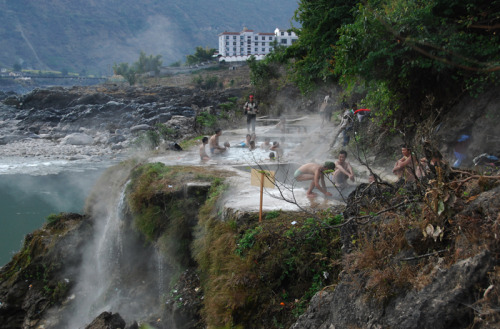
Locals bathe in a natural hot spring along the Nu River near Liuku, in China’s Yunnan province, March 29, 2016. 
 From the Malaymailonline
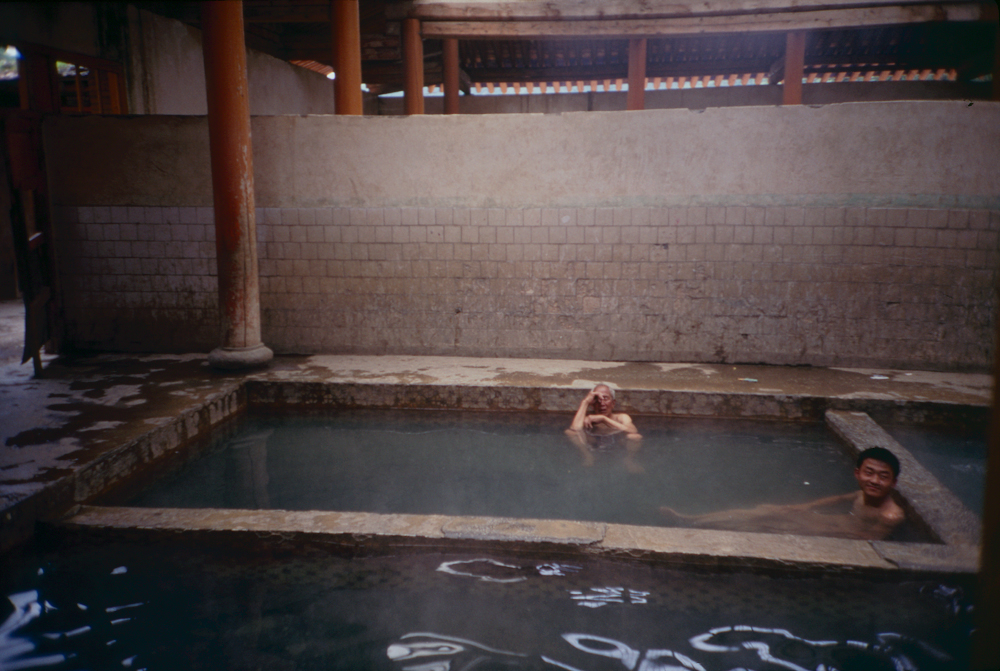
A notre arrivée, le moine qui nous accueille nous explique comme il peut qu'il n'y pas de douche au monastère mais pas de soucis il y a une source chaude à quelques minutes de là... Le lendemain matin on découvre la fameuse source, c’est la plus belle salle de bain qu'on ait vu du voyage 😄 #hotsprings #bathroom #mountains #freedom #nature #naturelovers #beautifuldestinations #experience #voyage #tourdumonde #travel #travelling #travelgram #passionpassport #travellovers #tourdumonde #adventure #lifeofadventure #backpacking #backpacker #traveladdict #wanderlust #landscape #landscapes #neverstopexploring #discover #1jour1lieu #china #sichuan #experienceroutard #lemondeaporteedemains
Tracking
The stan republics:

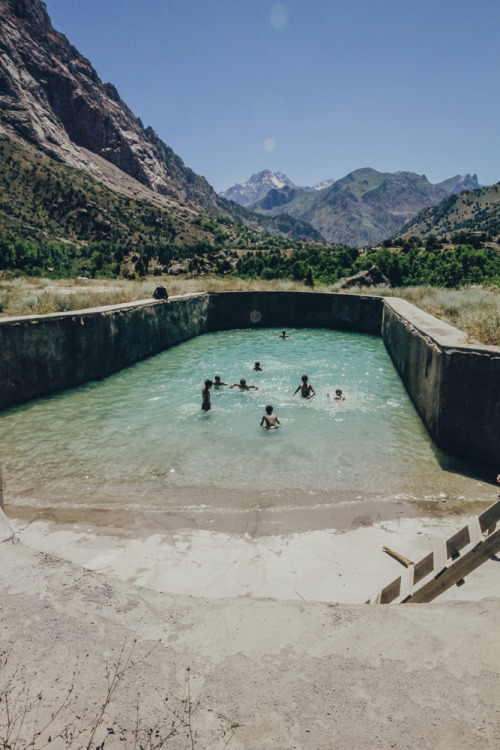
Garam Chashma, Tajikistan. danielsanwit:
Met blote Tadjieken in een warm bad #adventure #hotsprings #bloterts
Warm baths in the middle of the nature, no one around and a view on the river!AltynArashan. Kyrgyzstan.
Photo credit @vrouwopreis 🌲🌲🌲🌲🌲🌲🌲🌲🌲🌲🌲🌲🌲🌲🌲🌲🌲🌲🌲🌲🌲🌲🌲🌲 ➡➡ Follow @kyrgyz.nature
➡➡ Tag #kyrgyznature 🌲🌲🌲🌲🌲🌲🌲🌲🌲🌲🌲🌲🌲🌲🌲🌲🌲🌲🌲🌲🌲🌲🌲🌲 #kyrgyzstan #kyrgyzmountains
#centralasia #naturekyrgyzstan #kyrgyznomad #mountains #beautiful #summer #sky #wonderfulplaces #tracking #horseriding #wonderfulplaces #aboveseelevel #nature #naturelovers #asia #backpacker #природа #природакыргызстана #горы #лучшегормогутбытьтолькогоры #кыргызстан #горыкыргызстана #issykkul #lake #altynarashan #hotsprings
Главный шеф-пилот велобуса и начальник авто подразделения Клуба вело приключений принимает водные процедуры на минеральном источнике во время Altyn-Emel Bike Tour
#veloalmaty #showedup #hotspring #altynemel #veloclubkz #biketrip #leaser #travel #alabike #alatau
Kyrgystan, Karakol, naport_soaps:
#горячиеисточники, сероводородные, попахивает тухлыми яйцами, вода горячая - градусов 40-45, долго не посидишь, рядом горная холодная речка, в нее можно прыгать :) #иссыккуль #караколь #кыргызстан #naportsoaps #hotsprings
everything centralasia, back in Tajikistan: 
Trip to Iskandarkul & Saritag with some friends.
Whaling
Finally Kamchatka and around ...
 Бассейн с голубой глиной на Дачных источниках. Отдых после похода на Мутновку.
#камчаточкалюбимая #камчатка #мутновка #горелый #горячиеисточники #туры #турыпокамчатке
Looking at the last photo, don't really know where this. Chukota refers to Chukotka Autonomous Okrug a large administrative tundra steppe area on the eastern most point of Asia / Russia. It could refer to Gil’mimyl Hot Spring, to Senyarinskiya Hot Spring (which does look similar, though more rustic) or to (Kukunyskie) hot springs near Lorino village. Read other possibilities here. 

Tundra hot springs and whale bones #chukotka #чукотка #arctic #tundra #hotsprings

Saturday, August 23, 2014

Too far

'Jiangzha'
Sichuan, China. Source: messland

Lacking
Natural soaking areas are mostly threatened by developers. Away with the traditions, in with the wellness. But at a price. Development is mostly poorly done with little or no regard for local needs, all on the basis of pipe dreams: cash. But more often than not this cash is not forthcoming and the new owners of the previously publicly held entity now flip the premises to others who build more. If anything this blog seeks to endear the traditions and bath in the naturalness.

But the truth is that the future is more concrete, literally.  A lead article from scidev.net  (July 21). On Himalaya's geothermal potential. Basically more could be done with it. 
'Thousands of megawatts of geothermal energy remain locked up in the Himalayas because of environmental considerations and lack of investment in research, say international geologists'.
Another article can be found here..

Taking a dip in a hot spring #hotspring #swim #dip #wakhanvalley #tajikistan #afghanistan #ontheroad #wanderlust #nomad #hdtravellingslowly #bicycle #bicycletouring #cycletouring #cycletour2014
Just a shot from the travels of hannah and friends going east. A full description of their hot spring find here. If I am correct the above is from Tajikistan with Afghanistan on the far side ...

On roark.sleptlate.org you can find this soaking adventure from Jalal-abad, Kyrgyzstan:
'around 50 kilometers south of Arslenbob in the city of Jalal-Abad atop a hill is an old ex-Soviet spa/sanatorium.  these giant decaying facilities are speckled throughout Central Asia but this particular one happens to be built around a hot spring.  after several failed attempts at trying to navigate my way through the confusing Kyrgyz bureaucracy, i was finally able to book myself a “mud treatment”.  i was lead swiftly by the arm by a very helpful, very persistent nurse to the lower levels of the sanatorium where i was met by an older gentleman wearing a rubber apron and rubber boots.  he lead me through a door where a long hallway of tiled cubicles stood, poured a bucket full of hot smelly mud into a plastic covered bed and then made a few hand gestures that suggested i should strip naked and lay down in it.  there are times when getting naked is an easy, natural process but this time was most certainly not one of them.  i had come too far to turn back now.  the strange Kyrgyz man in the rubber suit with bucket in hand was waiting patiently for me to keep up my end of the bargain.  all i had to do was get those clothes off and… ya know… lay down in that mud immediately after.  and so i smiled at the nice man, who was still standing there of course… and then… well… did exactly that.  before i could fully come to grips with how vulnerable i felt lying there naked in the smelly hot mud, the man just laughed and then dumped a bucket of scolding hot mud all over me.  then he folded me into the plastic sheet like a burrito, covered me in additional wool blankets and poured in two additional buckets of mud, one in the opening at my feet and another in the opening at my neck.  then he shook me back and forth and then walked away.  as pain turned into pleasure, my face began to itch uncontrollably.  i was cocooned, hot and helpless.  then an overwhelming sensation of deep relaxation washed over me and seemed to penetrate my bones'.
Picture perfect

In contrast to the infinity pool on the men's side the ladies have to contend with the walled in soak at Khirganga, HP, India. Posted by catherineask
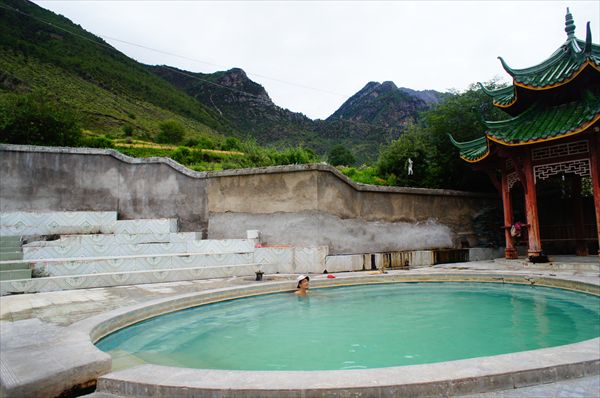
Holy natural hotspring in Kheer Ganga at 2960 metres! Perfect for karmacleaning.. All my sins washed away emoji #shiva is said to have #meditated in #kheerganga for #3000years

Just another photo from many concerning the Nujiang's (Yunnan, China) natural hot springs. Source

#hotspring #khangairesort chillin in paradise
Mongolia. bilguunkh4

After long trip to Tobolsk Hot Mineral Terms near Tyumen, 40 degrees of relaxation! emoji
Tyumen lies in west Siberia. dafchiz

Socializing
An interesting and different article on Bhutan's hot spring baths by ktshering.
'Unfortunately (with due respect to the hoteliers for using this word), the commercialized versions of hotstone bath tubs which is available in most resorts and hotels across Bhutan is just an attempt to make a close replication. Most importantly, it misses out the intricate social bonding process involved in the task which takes atleast a day. If the tourists are to pay a hefty price for this, then they must experience the process as well. More than the health benefit that one derives out of this "medicinal water", it is much about enhancing your family bonds, and building friendship
As far as my knowledge goes, no scientific studies have shown the water to have health benefits but Bhutanese will not mind continuing with the practice. The placebo effect, good meals and societal bonding during the process may be some of the reasons attributable for the revival of health'. 
He then describes the process and ends with this photo:

Enjoying the fruit of the hardwork
On sekaishinbun.net a top 10 of favourite hot springs. No. 3 on the list, Shikatori, is located somewhere between Yunnan and Sichuan (China), if possible:


No. 5 is from Tibet (Garze) which includes the strange notion of racy photo's on the wall surrounding the tub. No. 8 is likewise from Tibet, Tirtapuri. All-in-all nice photo's.

Wish i could shower like this every day! #nepal #hotsprings

Sunday, July 27, 2014

Lisu soaking exposed

  Source
 
Lisu Bathing
Bordering Burma, the Lisu ehtnic minority live along the banks of the upper Nujiang (Salween) river, in the autonomous prefecture of Nujiang, one of the westernmost administrative divisions of Yunnan, China

Lisu tradition dictates the local custom of holding a bathing festival coinciding with the their new year celebrations. 
This tradition of holding a bathing festival is very much similar to the Tibetan custom (Garma Ri Gi). The tradition transcends the mountain themselves; Hindu's have traditional bathing festivals as well as adhering spiritual connections to water. 
Unique to the Lisu of Nujiang is the involvement of hot springs, which seems sensible considering the time of the year the event is held.


'Every Spring Festival, the Lisu people gather at the Hot Springs by the Nujiang River
By taking baths and washing off dirt with sacred spring water,
people hope for forthcoming auspiciousness'.
Posted by Funansan.

Th Lisu tradition of bathing in hot springs at New Year is called Kuoshi Festival (the New Year festival) determined to be from 20-22 December each year contrasting with Tibet's mid-summer bathing tradition. The practice though does have it's local roots:
'Legend says that the estuary of a huge pool below the cliffs at the foot of the east Gaoligong Mountain was guarded by a pair of little green sparrows. When local people gave parties, year after year, these green sparrows magically provided all the bowls, chopsticks, tables and chairs needed. Then a man failed to return the borrowed articles to the birds and enraged the Dragon King, who ordered that the pool be filled up. The birds turned into girls who bathed in the hot spring near the pool and departed. Consequently, early spring every year, local residents camp near the spring to offer sacrifices to the Dragon King and the magic sparrows, and bathe'.
Others simply see the custom of holding a bathing festival in more practical terms:
'By taking baths and washing off dirt with the sacred spring water, people hope for the forthcoming of auspiciousness'.
Then again the bathing is only a minor part of the festival apparently:
'The most interesting event of the Lisu people's traditional Kuoshi festival is the Hair-Combing Contest held on the first and seventh days of the first lunar month'.
The bathing festival seems to coincide with the Lisu New Year, but might just follow the Kuoshi festival; the Bathing Festival is
'... usually held in the first month of the lunar year'.
Which one could also describe as very early spring .... 

How to soak Lisu Style
Though soaking is part of the Lisu cultural tradition, this source puts the whole soaking process in more evocative terms:
'When the time comes, people from near counties and regions, wearing rich dresses and bringing food, luggage and even cooking stuff, keep pouring in. Tents cover the place, which is quiet in normal times. People all crowd together, singing and smiling happily, and the scene is full of bustle and excitement. The "Spring Bathing Festival", which used to be a day to take bath and cure diseases, now becomes a festival of revelry for people to spend holidays and dance and sing. Especially for youths at their life's full flowering, they gather together in dozens or even hundreds to compete songs, poems and look for lovers. It lasts all through the night and they never feel bored with it'.
No, soaking is not boring here.

However, when searching the web for hot springs in the Nujiang Autonomous Prefecture nearly all focus on the bathing during the festival, as if no soaking takes place at other times. 
And unfortunately most of the reporting on the festival involves sensationalizing the methods of bathing. 
For instance eChinacities includes Nujiang valley hot springs in China's Top 5 Best Nude Bathing Areas despite the fact that the Lisu bathe only semi-naturally ....
It even means that simply the sight of seeing soakers soak can be the ultimate destination. From Yunnantour.net:
'Every year, during the Spring Festival period, Lisu minority people will have bath together in hot springs along both sides of Nu River (the Salween). And held many activities such as poem contest, singing and dancing, etc, to celebrate the coming of spring season. This trip is specially good for photographing'.
For proof purposes the site no longer exists alas. 

Source, caption translated by google:
'Captain guide whispered, pointing to the river: there is beauty in the hot springs! Aha! This really been kept under Liu arrived, I saw the green leaves masking, several topless women are soaked in smoke curl Zaochi, the Liu quietly approaching, when they found me immediately picked up a towel to cover the naked upper body let me exceedingly disappointed!'
And how is the experience seeing soaking locals?
'I left the competition place at noon and walked to visit their "zaotanghui" (public baths) gathering. Some women were taking baths in the hot springs, laughing and playing. Even when tourists focused their cameras on them, they did not behave in an offended manner. What a simple and happy nationality'.
So much for the modern man ... 
Another visitor mentions that the bathing festival is highlighted by eight camera bearing tourists and adds this:
'It is said, used to be with the bath naked men and women, and now more and more "civilized", "naked" too little, men and women are "incompatible", and is generally sub-pools and baths'.


Future
Anyway, modernity also plays a major part in the future of some of these soaks. The Sydney Morning Herald no less, also takes a soak with the locals:
'Men and women alike stripped to their underpants, Wa Ba's family and friends sat soaking in hot pools fed by a geothermal spring gushing from a mossy crevice under the gnarled roots of a banyan tree on the bank of the Nu River.
As his wife tended a kettle over a wood fire and young women drank cups of hot water straight from the spring, Wa offered round a bottle of his homemade rice wine, a clear brew strong enough to give a noticeable buzz from just a capful.
"Usually we take a bath here on the eve of the new year, so we're a bit late this year," said Wa, who lives in Dapicha, a village half an hour's walk away. "If you bathe here when the year is new, it protects you from illness" '.
Reported in 2005, it then goes on to mention that:
'But the hot pool enjoyed by Wa's group, the land of Pi's community, and perhaps even the tenure of his Lisu people in the Nu Valley, are threatened.
Just downstream from the hot spring, about five kilometres up from the town of Liuku, marker pegs stenciled "Liuku Power Station" are rammed into the earth beside a tunnel into the hillside. When built later this decade, the dam's reservoir will submerge the hot spring and many small farms and villages lining the river'.
Though the loss of the soaks is certainly a disadvantage, the projects (once completed) will certainly massively impact the local inhabitants and change their ways of life with no way back.
The consequences will also be felt in countries downstream, for instance now (in 2014) the Mekong is drying up along Thailand and in Lao, consequences attributed (by the press) to dams on this river, while decreasing waters are leaving Vietnam's Mekong delta more prone to become more saline, thus affecting agricultural negatively.
That said, dams have many environmental advantages over alternatives but being highly intrusive is not one of them.

The opposition, though not entirely successful, has been able to stall the construction according to the Times (21 May 2009). Opponents are organised in the Save the Nujiang as well as Salween Watch. 
The former reports that recently (March 2014) that construction is scheduled to start.

'Ritual bathing in hot springs is a part of the Lisu New Years tradition. These public springs will be deluged if the dam projects are completed. During Spring Festival camps are built near the pools which makes for a festival atmosphere'.

The soaks of Nujiang
Despite the considerable wealth of information on how the locals soak, hardly any information is available on where they soak and definitely no personal experiences are described on the net in English. Swell.

Some places that are mentioned as having soak sites are Chawalong, which is located in the north of Nujiang prefecture. The photo available on flickr doesn't endear itself to potential soakers though ....

Elsewhere mention is made of hot springs, 10 km north of Liuku city (Lushui county), the prefectures administrative center. These are Laomudeng (possibly), Bazhaodeng, Baihualing, Denggen and Mazhanghe (source).

Then this visitor mentions a distance of 30 km from Liuku and after google translate the following conspires:

 
'Fellow men left after another, but the ladies unwilling. Japan recalled bare bulbs, everyone wants to feel that part of the wonderful review in China at this time to revisit. At this point nothing can stop them, bidet into the embrace of the idea of ​​natural strong impact on them, and off it! Water it! Let those men waiting on top of it! Several women from the big city to abandon the secular, but also learn the local Lisu villagers, naked and jumped into the pool to that Pitt among the skin smooth and soft shine of turquoise water is more tender and beautiful in the clear water of the figure will undoubtedly expose'.
So to sum it up: there seems to be a lot of possibilities but does anybody know where?

Friday, March 19, 2010

Where to soak in Lisu land?

Lisu Bathing
Located the most to the west in Yunnan province, close to the Burmese border, the Lisu minority live along the banks of the upper Nujiang (Salween) river, in the autonomous prefecture of Nujiang.

Lisu tradition dictates the local custom of holding a bathing festival co-inciding with the local new year celebrations. The tradition of holding a bathing festival is very much similar to the Tibetan custom. The tradition transcends the mountain themselves, Hindu have traditional bathing festivals as well. Unique to the Lisu is the involvement of hot springs, which seems sensible considering the time of the year the event is held.

This Lisu tradition called Kuoshi Festival (the New Year festival) determined to be from 20-22 December each year contrasting with Tibet's mid-summer bathing tradition. The practice though does have it's local roots:
'Legend says that the estuary of a huge pool below the cliffs at the foot of the east Gaoligong Mountain was guarded by a pair of little green sparrows. When local people gave parties, year after year, these green sparrows magically provided all the bowls, chopsticks, tables and chairs needed. Then a man failed to return the borrowed articles to the birds and enraged the Dragon King, who ordered that the pool be filled up. The birds turned into girls who bathed in the hot spring near the pool and departed. Consequently, early spring every year, local residents camp near the spring to offer sacrifices to the Dragon King and the magic sparrows, and bathe'.
Others simply see the custom of holding a bathing festival in more practical terms:
'By taking baths and washing off dirt with the sacred spring water, people hope for the forthcoming of auspiciousness'.
Then again the bathing is only a minor part of the festival apparently:
'The most interesting event of the Lisu people's traditional Kuoshi festival is the Hair-Combing Contest held on the first and seventh days of the first lunar month'.
The bathing festival seems to co-incide with the Lisu New Year, but might just follow the Kuoshi festival; the Bathing Festival is
'usually held in the first month of the lunar year'.
Which one could also describe as very early spring ....

'Every Spring Festival, the Lisu people gather at the Hot Springs by the Nujiang River
By taking baths and washing off dirt with sacred spring water,
people hope for forthcoming auspiciousness'.
Posted by Funansan.

How to Soak Lisu Style
Though soaking is part of the Lisu cultural tradition, this source puts the whole soaking process in more evocative terms:
'When the time comes, people from near counties and regions, wearing rich dresses and bringing food, luggage and even cooking stuff, keep pouring in. Tents cover the place, which is quiet in normal times. People all crowd together, singing and smiling happily, and the scene is full of bustle and excitement. The "Spring Bathing Festival", which used to be a day to take bath and cure diseases, now becomes a festival of revelry for people to spend holidays and dance and sing. Especially for youths at their life's full flowering, they gather together in dozens or even hundreds to compete songs, poems and look for lovers. It lasts all through the night and they never feel bored with it'.
No, soaking is not boring.

However, the web search on hot springs in the Nujiang Autonomous prefecture nearly all focus on the bathing during the festival as if no soaking takes place at other times. And unfortunately most of the reporting on the festival involves sensationalizing the methods of bathing. For instance eChinacities includes Nujiang valley hot springs in China's Top 5 Best Nude Bathing Areas despite the fact that the Lisu bathe only semi-naturally ....

It even means that simply the sight of seeing soakers soak can be the ultimate destination. From Yunnantour.net:
'Every year, during the Spring Festival period, Lisu minority people will have bath together in hot springs along both sides of Nu River (the Salween). And held many activities such as poem contest, singing and dancing, etc, to celebrate the coming of spring season. This trip is specially good for photographing'.
The epitome of Lisu and Nujiang tourism according to Yunnantour.net.
Photo posted with above quoted encouragement to sign up.

And how is the experience seeing soaking locals?
'I left the competition place at noon and walked to visit their "zaotanghui" (public baths) gathering. Some women were taking baths in the hot springs, laughing and playing. Even when tourists focused their cameras on them, they did not behave in an offended manner. What a simple and happy nationality'.
So much for the modern man ...

Future
Anyway, modernity plays a major part in the future of some of these soaks. The Sydney Morning Herald no less, also takes a soak with the locals:
'Men and women alike stripped to their underpants, Wa Ba's family and friends sat soaking in hot pools fed by a geothermal spring gushing from a mossy crevice under the gnarled roots of a banyan tree on the bank of the Nu River.
As his wife tended a kettle over a wood fire and young women drank cups of hot water straight from the spring, Wa offered round a bottle of his homemade rice wine, a clear brew strong enough to give a noticeable buzz from just a capful.
"Usually we take a bath here on the eve of the new year, so we're a bit late this year," said Wa, who lives in Dapicha, a village half an hour's walk away. "If you bathe here when the year is new, it protects you from illness" '.
Reported in 2005, it then goes on to mention that:
'But the hot pool enjoyed by Wa's group, the land of Pi's community, and perhaps even the tenure of his Lisu people in the Nu Valley, are threatened.
Just downstream from the hot spring, about five kilometres up from the town of Liuku, marker pegs stenciled "Liuku Power Station" are rammed into the earth beside a tunnel into the hillside. When built later this decade, the dam's reservoir will submerge the hot spring and many small farms and villages lining the river'.
Though the loss of the soaks is certainly a disadvantage, the projects (once completed) will certainly massively impact the local inhabitants and change their ways of life with no way back.
The consequences will also be felt in countries downstream, for instance now (in 2010) the Mekong is drying up along Thailand and in Lao, consequences attributed (by the press) to dams on this river.
That said, dams have many environmental advantages over alternatives but being highly intrusive is not one of them.

The opposition, though not entirely successful, has been able to stall the construction according to the Times (21 May 2009). Opponents are organised in the Save the Nujiang as well as Salween Watch.

The soaks of Nujiang
Despite the considerable wealth of information on how the locals soak, hardly any information is available on where they soak and definitely no personal experiences are described on the net.

Some places that are mentioned as having soak sites are Chawalong, which is located in the north of Nujiang prefecture. The photo available on flickr doesn't endear itself to potential soakers though ....

Elsewhere mention is made of hot springs, 10 km north of Liuki city, the prefectures administrative center. These are Laomudeng (possibly), Bazhaodeng, Baihualing, Denggen and Mazhanghe (source).

Monday, March 15, 2010

Yunnan

Featuring Yunnan
Southeastwards of Tibet, I have chosen to cover Yunnan province. Within Yunnan, Himal conditions are to be found in the prefectures of Diqing, Lijiang and Nujiang. Administratively neighbouring each other these three districts are also connected geologically and ethnically to the wider Himalaya region. Excluding other prefectures has been done completely arbitrarily; I have to set my limits somewhere!

What we know
Yunnan's government web-site (SeeYunnan) claims that there are many hot springs:
'Though we’re not sure who is doing the counting, there is a purported 700 hot springs in the region'.
Unfortunately these 700 soaking sites are far from being mentioned on the web, I doubt whether even pages exist on about 100 hot springs. Then again I am certainly not counting ....

The Northwest
Comprising the northwestern corner of Yunnan the chosen prefectures are home to a number of what main road China refers to as minorities. However in each prefecture the minorities are usually the majority. Dequin is dominated by Tibetan, Nujiang by Lisu and Lijiang by Naxi.


But in general, all have a somewhat 'primitive' way of enjoying the soaks, so much so that the way they bathe adds to building up a matrix of reasons for tourists to intentionally seek out these soaks, if only for viewing purposes!

In the following blog entries I'll focus on each prefecture in more detail, trying to sum up the locations of the soaks but more importantly looking at the traditions of soaking and how the wider outside society is both curious though also seeking to initiate change under the wider held 'belief' of what modernity entails....