Showing posts with label Arunachal Pradesh. Show all posts

Sunday, February 16, 2020

Friendship

Gangyap Hot spring Located at 10km from Tashiding. #hotspring #Tatopani #westsikkim
Some interesting finds to share.
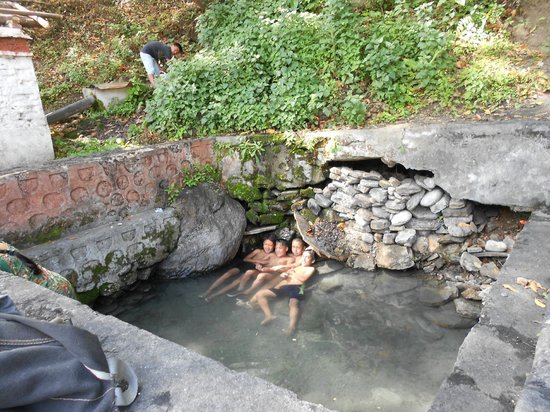
Such as above: from the former kingdom of Sikkim. Or below, Dirang from the Indian state of Arunachal Pradesh.


Hotspirngs and warmth of friendship.
Everyone
Located between these two Indian states, is the kingdom of Bhutan, the photo following is of Duengmang:

What a beautiful wonderland 🌱💧..#duenmangtshachu #hotsprings #hiddendestinations #beautifuldestinations #zhemgang #bhutan #traveldiary #travel2020 #travellist #travel #traveldiary #instatravel #travelgram #igtravel #travel #travelphotography #travelphoto #himalayan #musttravel #landscape #trippy #makemytrip #tripver #travelocity getaway #vwtravelshot #yeegetaway
Dopo tanto freddo e tantissimi km fatti.. una doccia calda in mezzo alla natura è la cosa più bella del mondo 🦁Buon anno a tutti🎉🎉🎉😘 #nepal #wild #nature #hotspring #trekking #travel
Over to Nepal, above Jhinu hot spring (and showers), below Chame, as you head up to Manang.


6 hours of trekking in shin-deep snow today to get to Manang. Thinking back to more relaxing times in the hot spring in Chame 😅 @gadventures#explorenepal #nepal #annapurnacircuit #annapurna #chame #optoutside #passionpassport #earthpix #neverstopexploring #exploretheworld #getoutside #igtravel #keepitwild #theoutbound #wanderlust #beautifuldestinations #roamtheplanet #travel # #discoverearth #adventure #trekking #hiking #hotsprings #gadventures
Back to India, but then more to the west.
After Nepal instagrammer Hide_onsen packer hits India's Himal. He starts off with Vashisht hot spring, then Gurudawara, Shiv, Black Shiva and Shittakunda hot springs in Manikaran.
He relates his info more or less as such. On Kasol (Dec. 18, translated):
'Kasoru hot spring in Kasoru ♨️
free
river lies along the field temperature
snow mountain looks spectacular
one tub
spring quality is a free-flowing
sulfur smell pretty to
the hot water acceleration and more than 50 ℃
in Atsuku' soak it is impossible
basically scoop with a bucket
Indians to insanely hot
is over immediately scooped up with a bucket
Sugee
also came two people at 5 o'clock in the early morning
and brighter in large bustle about 10 people
Araitai mosquitoes
dressing room without a
toilet without'

All entries come with good photo's, such as this:

.バシスト温泉① inバシスト♨️Vhasist hot spring無料ヒンドゥー教の寺院内にある温泉Vashishtha Templeでの入浴は神聖で新鮮入浴者の多くは祈りながら入ってた浴槽は1つ 露天風呂泉質は、さらさらとしている硫黄臭がするがツンとはしない湯加減もちょうど良い気温は寒いので45℃程度あるのかな洗体は不可脱衣場なし寺院内で生演奏してたのでBGMもバッチリだが、観光地なので人の出入りはそこそこある#バックパッカー #backpacker #世界一周 #海外旅行 #travel #旅 #trip #旅好きと繋がりたい #traveling #aroundtheworld #tabippo #インド #世界の温泉 #onsen #hotspring #hotsprings #海外の温泉 #温泉 #温泉リゾート #リゾート #リゾート温泉 #温泉バックパッカー #温泉好きな人と繋がりたい #♨️ #露天風呂 #温泉旅行 #温泉好き #天然温泉 #秘湯 #温泉巡り
While rounding off his visit to Himachal Pradesh with Tattapani (translated, Dec. 23):

'Tattapani hot spring in Tattapani ♨️ free here Tattapani is under the influence of the three years before the dam is field temperature that has been put in the river submerged
It was pretty sad now remains, of small over hot water and the hotel spa only bathtub one spring quality is a free-flowing sulfur odor considerably in hot water acceleration and 43 ℃ before and after
scooping a bucket basically'
I believe he mentions that the (natural) hot springs are now submerged.
From the same date, an entry on the above mentioned hotel:
'Tattapani hot spring in Tattapani ♨️ bathing fee 600 yen here Tattapani is under the influence of the three years before the dam is field temperature that has been put in the river submerged remains Currently, only the hot springs of small over hot water and hotel hotels name Sandhya Hot Spring Health Care Tattapani
tub two private bath, co-bath one
spring quality is, there is little slime
sulfur smell is intense
with considerable fine sulfur Izumi
hot spring cure guests also come quite It seems
hot water acceleration is adjustable
Araitai is allowed there dressing room there is toilet'
Regards
So! I finally did it! It feels so good when a 'fear' or an internal obstacle is overcome! 😎 In Japan, I lost the opportunity to enjoy the wonderful hot springs this country offers, this was because you are reqiured to enjoy them completely naked! 😱 I couldn't imagine myself getting into a hot tub lluuuucha!! (naked) with complete strangers and also with not that completely strangers! 😱😱 Even though we are from the same gender... 🙈🙈 So, after this, my 'modesty' became a personal issue to overcome (juuuust for hot springs! 😜). Aaand here I am! These are the Garam Chashma Hot Springs, not only hot, not only naked but also open-air! The bystanders at the back were waiting for tourists to get into the pool! 🧐🧐 Of course, I sent them my regards! 🤪.#tajikistan #travelwoman #freesouls #wanderlust #ewetjourney #thePamirs #passionpassport #letsgosomewhere #traveltheworld #hotsprings #mytinyatlas #theglobewanderer #neverstopexploring #dametraveler #globetrotter #planetdiscovery #roamtheplanet #travelstoke #unlimitedparadise #traveldeeper #exploringtheglobe #tasteintravel #bbctravel #doyoutravel #welivetoexplore #cntraveler #livetravelchannel #travelawesome #viajar #traveladdict
Heading over the water divide, above Tajikistan's Garm Chasma.
Below a rarity on this blog, a soak with no soakers! Kyrgyzstan apparently.

krishofs at Kyzyl-Suu:
👌Hot spring i Kyrgyz••••#kyrgyzstan #denstorekultureisen2019 #uazbuhanka #hotspring #travel #explore #4x4 #offroad #sonya6500 #HofstadNET
I looked up more info on this soak. A very confusing picture. Kyzul Suu is a village:
'Kyzyl-Suu is named for the "Kyzyl-Suu" river that runs through it'.


Visit Karakol adds:
'We offer you a tour to “Juuku” Hot Springs which is located in Chon Kyzyl Suu village 50-60 km west from Karakol. There is also a cave “Kyzyl Unkur” , the remains of Borombai manap’s life, who lived here in the 19th century and the rock "Sim-Sim Open". The hot springs leak in two buildings built in the form of yurt. The Capacity of each pool – 10-15 people. The duration of bathing not more than 30 minutes because of high temperature and radon.
But is the first photo above the size of a yurt? Or does the photo below fit the description better? Also VisitKarakol:


baibol.kg provided me with this info:
The Kyrgyz region is rich in beautiful reservoirs. Among them, mountain rivers and lakes of glacial origin predominate. In addition to them, there are several unique natural thermal springs in the country. They are divided by size, temperature regime and chemical composition of water. But one quality unites them: unconditional benefit for human health. To one of these natural health resorts are the thermal springs of Jyluu-Suu, which are located in the Issyk-Kul region of the country. The deposit of warm springs is located in 55 km from the city of Karakol, at an altitude of 2390 m above sea level. For the convenience of taking baths here was built two swimming pools, separated by a solid wall. They are in a concrete structure, made in the form of a yurt - the national home of nomadic Kyrgyz. Pools are designed for an average of 12 people, the water in them flowing. The temperature of the sources ranges from 32 to 45 degrees Celsius. The deposit refers to chloride-sulphate-sodium, with weakly mineralized water. Staying in Jyluu-Suu helps in the fight against diseases of the musculoskeletal system, skin lesions, various inflammations and diseases of the gastric system. For those who have problems with the respiratory system, it is recommended to visit the saline room located here. The residence time in water is limited at a time, and should not exceed 20 minutes. There are contraindications for people suffering from hypotension, hypertension and heart diseases. A walk through the area will give a lot of new impressions: along the gorge the magnificent Kyzyl-Suu river rolls its majestic waters. Also Kyzyl-Unkur Cave is nearby. The best time to travel to the thermal springs of Jyluu-Suu is the summer-autumn period.
So do we refer to these as Kyzyl-Suu? Or Jyluu-Suu (or alternatively Dzhyly-Suu)?
BBC (Jun. 20, 2013):
'I could have stayed in the Kerege-Tash Valley for a season, but a few days ride and one or two yurt visits later it was time to head south to the long-promised Jyluu-Suu hot springs on an old caravan route that once linked with the Silk Road. The springs are oddly set inside a rustic blue and white hut in the middle of nowhere, looking out onto spectacular valley views. After almost a week in the saddle, the bath came not a moment too soon'.
But Dzhuly-Suu also refers to a place north of the Elbrus (source):
'In the northern part of Mount Elbrus there is a tract of Jil-Su. It is a unique and beautiful place of Kabardino-Balkaria. Gili-Su is translated as «warm water» and is widely known for the healing qualities of mineral water. More than fourteen sources are scattered along the tract in the upper part of the Malki River at an altitude of 2380 meters. Struggling from under the ground hot narzan has unique healing properties, is saturated with mineral and organic substances. And it is translated as «a drink of the hero». He is considered to be the main source of strength for the tribes of the sled that lived in ancient times. The water temperature is quite high, it is plus 22-24 degrees'.
So where are we?

Anyway, elsewhere in Kyrgyzstan, a photo accompanying a Czech report by outdoorito to the hot springs of Altyn-Arashan:


Finishing off with Mongolia:

Tsenkher Hot Spring spa resort. This hot spring is the second hottest spring of Mongolia after Shargaljuut spring. Heat of the water reaches 86 celsius degree. It is an alkaline spring that contains hydrosulfuric acid and silica union and used for medical treatment. Tsenkher Hot Spring is good for treating rheumatism, neuralgia, muscular pain and arthalgia and help improving digestive system, restoring immunity after surgery and recharging yourself. www.classicjourneys-mongolia.com #centralmongolia #hotsprings #Mongolia

Thursday, October 2, 2014

Into the wide open?

Hard trek
Located in the north-western tip of India, the state of Arunachal Pradesh, covers a tremendous amount of terrain, not much smaller than the whole of Nepal. The former contained more than 40 hot springs so it's not surprising to see that Arunachal Pradesh has quite some thermal activity, though possibly less developed and / or visited. It's therefore understandable that there's less info on the internet available.

Re-known for the many different ethnicities, Arunachal Pradesh is distinctly remote, little roads offer any kind of access. Tawang district bordering both Tibet and Bhutan is accessible and contains largely Tibetan Buddhist ethnicities. As one of the most accessible mountain areas it's not surprising to find that (as is the case with Bhutan to it's east) there are a number of hot springs not far away from Tawang itself (relatively speaking ...).

Tsachu Hot Spring is a bit of a language anomaly; Tsachu already being the Bhutanese name for a hot spring. It seems to be the most well-known, though not so easy to visit:
'Tsachu hot spring which can be reached by traveling by a light motor vehicle for two hours from Tawang up to Sarong Gonpa and trekking from there for another three hours'.
Or:
'Tsachu Hot Spring can be reached by travelling for 4 hours by a vehicle and another 4 hours on foot'.
Do note that Tawang is 10 hours drive from the nearest airport .... Tripadvisor is still waiting for reviews ... And this website notes the distance from Tawang as 230 km and adds:
'Apart from hot spring, this site is also suitable for hard trekking'.

The hot spring of Thingbu is located 68 km away from Tawang town. Apparently a pony is the most used form of transport for the final stretch from the roadhead.

Other hot springs located in Tawang district are Kitpi or Greng-khar (Grenkhar), the former being the name of the village rather than the name of the hot spring. This website adds:
'It is about 40 kms away from tawang town.This hot water spring and ‘ Manchu’ provides warm, sulphur rich water and cures many ailments'.
There's a slightly scientific entry on hot springs in Tamang which hardly adds to the above other than this gem:
'Monpa, Sherdukpen, Miji and Aka tribes take holy bath in these hot springs in the belief that their sins will get washed away. They also take a dip in the water for 1–3 h for healing any kind of skin disease.
Dejection
Mago
hot spring is located nearer Jang:
'where the water is so hot that “yak meat is cooked in 20 minutes”'.
Despite the above being the most well-known(?) in Arunachal Pradesh, there are no first hand experiences shared. This contrasts with Dirang (West Kameng district, south of Tawang), famous for it's apples, kiwi's and yaks to which Roy Biswas has paid a visit:
'The other famed tourist spot is the Hot Water Spring, which is also the main attraction for locals, who supposedly take bath in the Hot Springs as its water is said to possess curative properties. However, I was most dejected after having undertaken a long trek down from the main road, as an Ecological Camp has come up at the site, with a Cafeteria right in front of the Hot Spring, which is not only blocks the view of the Hot Spring, but also creates more ecological hazards, rather than preserving the ecology there for which it is meant & sounds. The local environment department needs to take a look at this, before it gets too late to redeem the hot spring'.

Others chime in:
'We had the exact same reaction when we went to check out that hot spring at Dirang. I would have expected at least a little bit of improvement there from 8 years back'.
Lower Dirang valley contains a hot spring near the village of Jia.

Located just inside of the Arunachal Pradesh - Assam border, the western town of Bhalukpong has it's own hot spring:
'Bhalukpong, which lies about 85 kilometers away from Bomdila on the foothills of Aka ranges, is an ideal picnic spot. The picturesque site is also a home to the Jia-Bharali river and a hot spring, which is believed to have a medicinal value (source)'.
Hot spring (sanaser, May 2014) 
Bomdilla. Source.

More to the east, Anjaw district contains two hot springs, one named Walong circle, the other Kibithoo circle.

'Located 20 km away from the Chinese border, Walong is situated on the western bank of river Lohit in Anjaw district. The mesmerizing place is famous for its hot water spring and the Namti valley. The hot spring is located amazingly at the confluence of river Dichu and Lohit. It is a major attraction of Walong and tourists fly to the place to take a soothing bath in the medicinal water of the hot spring'.

As always when there is little reference material, some caution is required as often different names as used for the soak!

Tuesday, September 21, 2010

Soaking with six of the seven sisters

Nestled among the Himalaya itself and the surrounding mountains lie the so-called seven sister states of Northeast India.

Way back in January 2010, Arunachal Pradesh, the most mountainous sister, had been highlighted but the remaining six states warrant some soaking attention.

Soaking for elephants. Not.
The biggest and least mountainous state, Assam has no less than 2 Garampani's; places which denote a spring of hot water. Most mentioned is the hot spring located in Nambar Forest Reserve, but exactly which Garampani it is, is unclear. In 2010 this website gave this information:
'... the two more famous ones [hot springs] are located in Golaghat district and North Cachar Hills. The one in Golaghat district is located in the Nambar Reserve Forest about 19 km southwest of Golaghat town. The water of this spring contains hydrogen sulphide and its temperature is 530C to 580C'.
Let's call this the Nambar Garampani. Other striking info on Nambar comes from this website:
'Elephants have now been denied the right to drink water out of Mother Nature’s very own hot spring in the wilderness of Assam. The Garampani hot spring by the side of National Highway 39 in Karbi Anglong district, Nambor Reserve forest, is now guarded by a huge ugly concrete wall. The area is an elephant corridor which the jumbos use almost on a regular basis'.
Looking more intently at the photo of this spring it seems that the wall is just for safety reasons with elephants as well as humans being protected for their own good. Sad though, that the elephants can no longer soak. 


A video of Garampani.
Underwater
Then aforementioned citation (from 2010) concludes that there is another Garampani hot spring in Assam state near the

'... headstream of Kapili is at a distance of 33 km east of Jowai. Its water is 350C warm'.
Let's say the Kapili hot spring or Kopili as I have seen or Umrangshu (Umrongso?), an often used alt. This Garampani is located close to the border with Meghalaya state in an area known for tea plantations and the hydro project on the Kapili. This website mentions:
'The beautiful Umrongso Lake, the quite valley, the hot water springs and the exquisite scenery are enough to captivate attention. The visitors in this area can enjoy both hot and cold bath and fishing in the river Kopili'.
It's unclear to me whether this hot spring still exists. Here I read
'7-km away from Umrangshu in Meghalaya , the hot spring Garampani is lost in the water of Kapili Hydro-Electric Project. Barrage and dams are constructed on the Kapli River along 19-km area from Umrangshu to Hot Spring. A Lake has already come up over here'.
Wikipedia finally mentions that the hot spring is
'now lost'.
More sisters
In reality there is little info on hot springs in the North-eastern states of India.  Tripura and Mizoram seem to contain no hot springs. 

For Nagaland I found one mention of Tangkum Marok but am unsure whether or not this spring is hot.
Manipur contains Ukhrul saline springs. This link mentions:
'The Saline Springs of Ukhrul are the Salt springs of Ukhrul located in the outskirts of the town.
Ukhrul has a number of brine wells located at Chingai, Challao, Nameri, Luchai-Khullen, Mariem and Kharawam. The water from these springsis used in making salt cakes'.
Again uncertainty remains about the supposed heat of the springs at hand.
 
That leaves us with world's wettest region, the state of Meghalaya.
By far the most often mentioned in Meghalaya is the hot spring of Jakrem (Lawblei). Unfortunately most mentions are as follows:
'Jakrem in Meghalaya is fast gaining popularity among tourists as it is a wonderful health resort. It is blessed with hot-springs of sulphur water which lure people from across the globe. It is believed that the water of the hot springs is endowed with curative medicinal properties. People come here to bathe in these hot-springs for good health'.
From photo's of Jakrem one can only conclude that the claim that it lures people from all over the world seems a little hollow, though the surroundings are appealing.

From the Megha hot spring resort website.

The state Department of Tourism adds:
'Jakrem has now developed as a potential health resort. People from all parts of the region throng here to take a dip in the hot spring. Bathing compartments are available around the spring for the use of the public. It is also a favourite picnic spot during winter'.
The Shillong Times notes (December 8, 2013) that a bacteria was found here which was previously uncharacterised.


Elsewhere there are only lesser known hot springs in Meghalaya such as the hot spring of Umngi which is situated along a trekking route:
'Weiloi to Ponkung / Pongkung to Umngi: One can reach Weiloi village from Shillong by car / bus. On the way from Weiloi to Umngi there exist two natural mineral water springs. The Hot Spring of Umngi has the potential for becoming a health resort'.
Possibly 2 hot springs?

Resubelpara is the name of a town in north of Meghalaya which possibly moonlights under the name of Williamnagar. Some 15 kms away (from Williamnagar) is apparently a hot spring by the name of Bakra (source). There's even a small photo album on Facebook.

[updated August 2014]

Friday, January 22, 2010

Into the wide open?

Located in the northwestern tip of India, the state of Arunachal Pradesh, covers a tremendous amount of terrain, not much smaller than the whole of Nepal. The former contained more than 40 hot springs so it's not surprising to see that Arunachal Pradesh has quite some thermal activity, though possibly less developed and / or visited. It's therefore understandable that there's less info on the internet available.

Reknown for the many different ethnicities, Arunachal Pradesh is distinctly remote, little roads offer any kind of access. Tawang district bordering both Tibet and Bhutan is accessible and contains largely Tibetean Bhudist ethnicities. As one of the most accessible mountain areas it's not surprising to find that (as is the case with Bhutan to it's east) there are a number of hot springs not far away from Tawang itself.

Tsachu Hot Spring is a bit of a language anomaly; Tsachu already being the Bhutanese name for a hot spring. It seems to be the most well-known, though not so easy to visit:
'Tsachu hot spring which can be reached by traveling by a light motor vehicle for two hours from Tawang up to Sarong Gonpa and trekking from there for another three hours'.
Do note that Tawang is 10 hours drive from the nearest airport ....

The hot spring of Thingbu is located 68 km away from Tawang town. Apparently a pony is the most used form of transport for the final stretch from the roadhead.

Other hot springs located in Tawang district are Kitpi (source) or Greng-khar (source), the former being the name of the village rather than the name of the hot spring (source PDF).

Mago
hot spring is located nearer Jang:
'where the water is so hot that “yak meat is cooked in 20 minutes”'.
Despite the above being the most well-known(?) in Arunachal Pradesh, there are no first hand experiences shared. This contrasts with Dirang (West Kameng district, south of Tawang), famous for it's apples, kiwi's and yaks to which Roy Biswas has paid a visit:
'The other famed tourist spot is the Hot Water Spring, which is also the main attraction for locals, who supposedly take bath in the Hot Springs as its water is said to possess curative properties. However, I was most dejected after having undertaken a long trek down from the main road, as an Ecological Camp has come up at the site, with a Cafeteria right in front of the Hot Spring, which is not only blocks the view of the Hot Spring, but also creates more ecological hazards, rather than preserving the ecology there for which it is meant & sounds. The local environment department needs to take a look at this, before it gets too late to redeem the hot spring'.
Lower Dirang valley contains a hot spring near the village of Jia.

Located just inside of the Arunachal Pradesh - Assam border, the western town of Bhalukpong has it's own hot spring:
'Bhalukpong, which lies about 85 kilometers away from Bomdila on the foothills of Aka ranges, is an ideal picnic spot. The picturesque site is also a home to the Jia-Bharali river and a hot spring, which is believed to have a medicinal value (source)'.
More to the east, Anjaw district contains two hot springs, one named Walong circle the other Kibithoo circle.

As always when there is little reference material, some caution is required as often different names as used for the soak!