Showing posts with label geothermal spring. Show all posts

Monday, March 14, 2016

Soaking in Sikkim

Hot springs in Sikkim
Sikkim is a former independent country that has been part of the Republic of India since 1975. Besides the Indian state of West Bengal to the south, it borders Bhutan to the east, China to the north and Nepal to the west. Distinctly mountainous (it shares the world's third highest mountain peak with Nepal), situated on the south flank of the Himalaya, it's not surprising to find that it contains a number of hot springs.


Sikkim - A Travellers Guide by Arundhati Ray gives a short intro to hot springs in Sikkim ("very good for health") and has a couple of photo's which give us some insight into soaking couture (see page 38 / 39). 
Two other references I found list nine hot springs in Sikkim, though what follows are a few more. Possibly some duplication or some unlisted, who knows?

'Lot of barebodied men of all ages skin dipping in a pool of water. The water is rather warm than hot. An appearance analogous to a fish market, where a large number of live fishes are kept in a barrel for sale. This, in essence was my first impression of the Tatopani hot spring site [Legship]'.

Sweet
Legship in South Sikkim could well be the name of the first of a number of hot springs in Sikkim. Alternatively it's known as Reshi hot spring or Phur Tsachu, there's no consensus on the right name.
Legship itself is becoming more well known as it hosts a Shiva temple and is the site of a hydropower station.
The hot spring itself is
located outside of Legship:
'Situated on the bank of River Rangeet is the hot spring 'Phur Tsa Chu', half an hour drive from Legship and one hour drive from  Jorethang. Pilgrims from all walks of life come to dip in this hot spring during the month of January to March'.
Put differently:
'Ideal spot for bird watching and butterflies. At 8 kms from Legship and 34 km from Ravangla towards Naya Bazaar on the banks of river Rangit, lies the popular hot sulphur springs. It's great medicinal values as well as religious importance attract many tourists and local devotees. The place is also important for two sacred caves Khandosangphu and Sharchog Begphu, where the great Buddhist Saint Padmashambhava is believed to have meditated during His journey to Tibet in 7th century'.
More revelations:
'It flaunts of a hot spring nearby, believed to hold medicinal powers, and footprint inscribed rocks which are attributed to that of the fairies. Lho [cave] Khandro- Sang Phug is said to be associated with the ‘God of Increasing Knowledge’'.
'Hot Spring Legship West Sikkim'.
Siniolchu Travels

There is though one official website, complete with GPS coordinates. One must also note that there's quite some confusion concerning what / where. This link to a publication revels GPS coordinates of reshi, Borong and Polo hot spring [1].

Not everyone is however charmed by the hot springs. Experience 1:
'From Kechopari we took a jeep to Legship where there were "hot springs". After a long hike we discovered that these hot springs were a tiny dribble of water by a monestary along the Rangit river. Our dreams of swimming in warm water were dashed. Plus, i had been feeling a bit under the weather already and the smell of sulfer did me in. I spent most of Legship asleep in bed. Sweet sweet hotsprings'.
Experience 2 (link though since orginal posting in 2012, not working):
'In Legship however things were not so wonderful. There were no rooms at the one hotel that was open. No problem, I could walk to the hot springs where there were huts. I asked around. The consensus, the hot springs don't get hot until DECEMBER. Dear Lonely Planet editiors, this might be something you want to include in your next edition'.
Let's hope they are paying attention in Melbourne ...
Experience 3:
'From Tashiding we went to Legship, a nowhere transit town, but we had a picturesque walk along the river to find the local natural hot springs. Compared to NZ, the hot springs are lukewarm and very shallow. But it was a cultural experience to be pressed firmly between 30 partially-naked, old, local women, and pampered with a mud treatment and constant scoops of hot water over parts of my body freezingly exposed by the shallow water'.
Experience 4:
'The Scorpio again came to halt at the Reshi Hot Springs (also know as Taatopaani in the local lingo). Well but before we could get to see the springs, we had to walk down some real steep steps, cross a creaky suspension bridge & then walk through another narrow path all the way to the banks of the Legship lake. Well once we reached the springs, we saw this small encircled area separated from the lake; that my friends, was were the water was hot.
There were plenty a people who were relaxing in the hot waters of Reshi; more were just flowing in getting out of their clothes in a whim; taking a dip. My personal thoughts were that though the area was pretty, it could be a tad better maintained'.
So to recap: the springs are disappointing, poorly maintained and full of old half naked women (sexist?). Raju completes the laments with
'Firstly there is a near vertiginous climb down a narrow flight of steps. Then we had to cross a worn out suspension bridge over the crystal clear river water. Walk for about 200 metres to reach the spot of hot springs. It is a very small pool of water just above the main flow of the river. Hot water overflows from this pool into the river. It was so full of people that we lost the interest of dipping in it'.
The following is a more balanced article:
'It just takes a one hour ride to reach Legship form Jorethang , which is famous for its hot water spring [Tatopani]. On the way to Legship, one can see a board put up wherein it is written Tatopani Bhir. Just on the bank o the river Teesta, there is a 20 x 20 square foot hot water spring. The water is bounded with two steep hills [Bhir], Sanghanath and Miyong hills.
The Legship hot water spring is known for its medicinal proprieties for healing different ailments like chronic skin disease, bronchitis and hearing ailments. The hot water spring is also worshipped by the people and there is a mythical belief that if people with any desire for something here then that is definitely fulfilled, so people come here to fulfill their long pending wishes from far off places like Nepal, Bhutan and the neighbourings states like Assam, Nagaland, Bihar. The pilgrims generally come to the hot water spring in the month of April to November, every yea. More than six thousand people throng here which then turns into a mela. Most of the pilgrims stay at the hot water spring for about a week. The people are allowed to take a bath in tow batches of males and females at a time. Every group is allowed to have a bath for two hours. The Chowkidars [overseeers] that have been appointed by the Tourism Department see to that every thing goes according to order and in time. The department has also built one resting shed with attached bathroom for the pilgrims. The department is also building eco-huts, which is under construction. The eco-huts will provide makeshift lodges for the pilgrims, during their stay at the hot water spring. The six months during which the pilgrims come to the hot water spring gives the local villagers a chance to earn some money by doing various business, along with giving the village the feeling of holding a ‘village fair’'.
Source: The Mail, dated: 10th September 2007.

Furthermore there is one youtube vid.

Impressed
The above is probably the most well-known of Sikkim's soak. Less well-known are what follows.

Situated close to both the Tibetan and Bhutanese borders it is often referred to by the Bhutanese name for hot springs (tsachu) which is mentioned after the location. In this case
Yumthang Tsachu
Besides it being the location of a hot spring, Yumthang (and the valley in where it is located) is known as the 'enchanted valley of flowers', the flowers sprouting from the alpine meadows and extensive rhododendron forests. The fame of the former is such that the government organized the International Rhododendron Festival 2010 here.
The hot spring:
'At an altitude of 12,000 ft, 135 km from Gangtok in North Sikkim, a few hundred metres off the road, after crossing river Lachung over a wooden bridge lies a small hut which houses a pool where sulphur water of hotspring is collected for taking a dip'. (source)
Or
'For the convenience of bathers, there is a hut with two pools which contains hot spring water. Hot water rich in sulphuretted hydrogen gas from a spring just behind the hut and is diverted to the pools' (source).
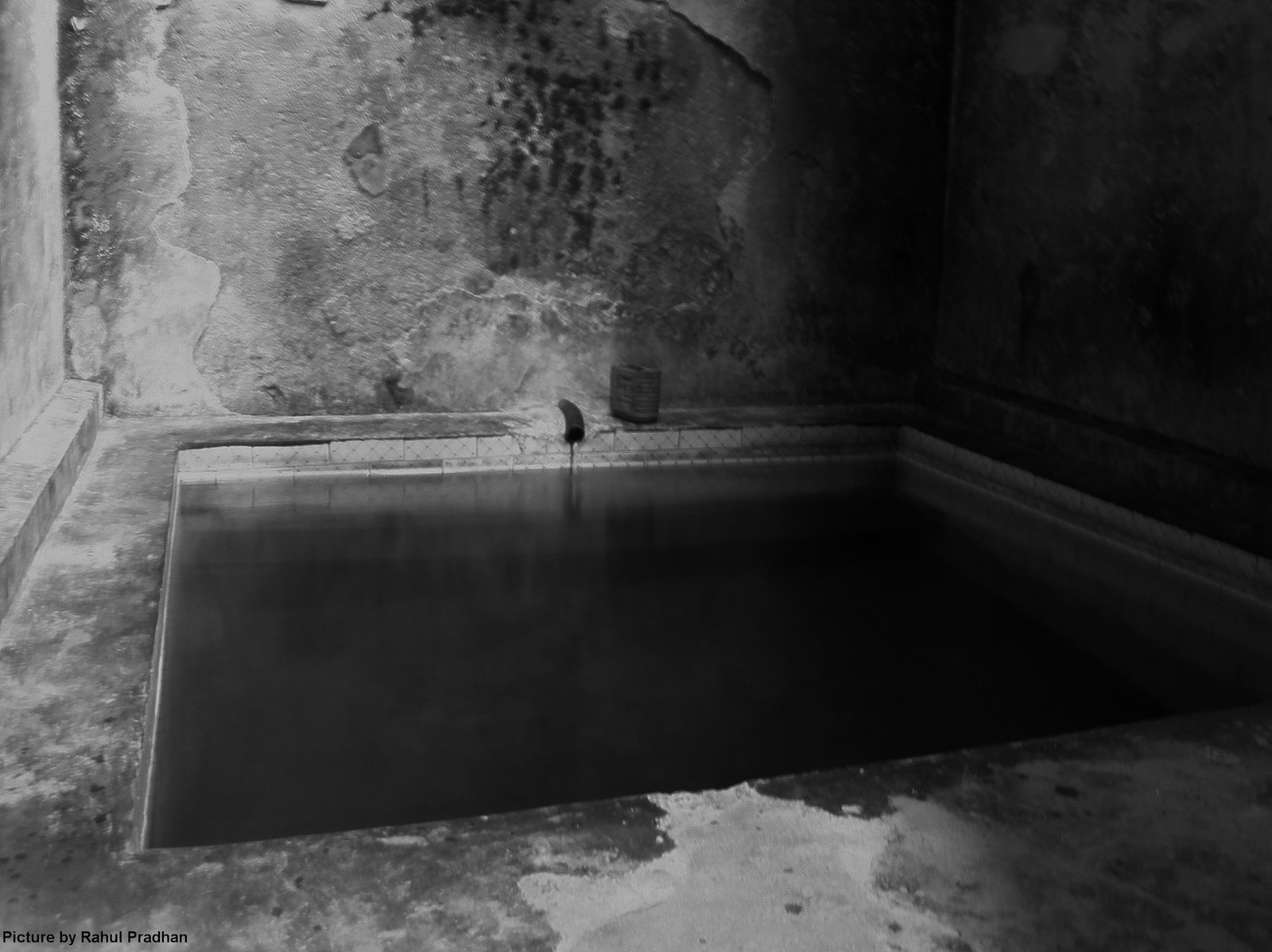
P2061024 Hot water spring, aka "Taato Paani" in Yumthang.
First hand reports often are tepid in their appreciation, others seem more honest as you might agree with after a look at the picture above.
'we wind up at a much advertised and highly unappealing hot spring which is basically a tiny cement ditch containing hot spring water enclosed in a dark and dingy hut (luckily my lonely planet guide had prepared me for this). silla from iceland, the land of beautiful hot springs is very impressed! haha!'
Haha indeed. Welcome to Asia. Sikkim Times (9 October 2009) adds that the facilities will be improved.
Another first hand experience (2010):
'An hour further north and we got to Zero Point, the end of the road, with the hot springs renowned for their medical properties. There are some families that come to hot springs every year for about 2-4 weeks. They sit down in the hot water few times a day, cook and mostly sleep and relax in a hut. They believe that this is the best cure not only to have a beautiful skin but also for any physical problem. They were so hospitable. They made tea for us that warmed our cold body (some people from our group jumped into the hot pool but next day, all of them had a cold:)'.
Yumthang, wikipedia reports, is not year round reachable, during the winter the road there is often closed due to snow fall. Or
Yumthang is not feasible as roads are commonly foggy
Yumesamdong (or Momay Samdong) is located just up the valley from Yumthang (25 km). There are reputed to be more than 10 hot springs closeby. Others say 14! As it's pretty remote and rugged (snow more or less year round), not much is known about the springs in this area. One can get a first hand report of a trip to Yume Samdong. Beware though, in 2009 tourists died when a rock smashed their car, the Sikkim Times reports.
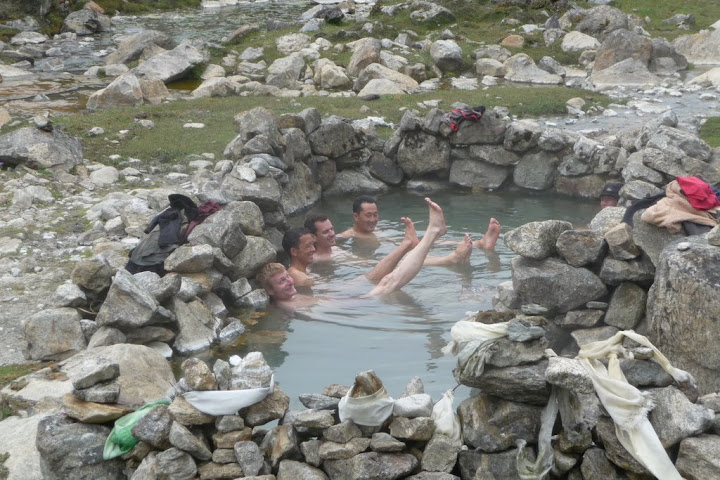
The photo is from a short blog entry by helena and jakob while visiting Yumesandong.
They also have a reference to Rinjink hot spring, not substantiated anywhere el
se.

Murder
Close to each other are  hot springs of Borong and Ralang in South Bhutan:
'Borong and Ralong hot water springs are located within a distance of 7 kms from each other. Popular with visitors from all over the region, these natural spas are said to have strong curative powers. Ralang Cha-chu [or Tsachu] can be reached after an hour long walk from Ralong monastery while Borang Cha-chu is reached after a 7 km drive to Ralong and then a 40 min walk downhill'.(source)
Ralang hot spring is, you might have noticed, above often referred to as Ralong, but it seems Ralang is the most often used. Ralang, like Borong, is apparently very beautiful and Ralang is also home to a Buddhist monastery. The hot spring played an important part in Sikkim's history when in the 18th century the Sikkim ruler was murdered here.

Finding it, is not straight forward Adrian shares with us:
'then set off for a nearby hot spring, that I understood to be 1-2 km away. ... It wasn't... I'm not quite sure how I got this so wrong, but I'd estimate in the end I walked about 10 miles up and down a very steep hill, having neglected to take any water with me. ... The hot spring was a small pool containing water that was quite hot, however by this point hot; undrinkable water was not really the sort I was after. So after a brief rest we [Adrian and a dog] set off back up the hill, which really was very steep'.
More experiences:
'Eventually the jeep came to a stop and when we asked where the hot springs where they told us that they were closed because it was low season... it was incredible how not one person gave us this important piece of information... we would have really taken it into consideration'.
This report notes that Borong hot spring is annually geared up for the cold season soaking seekers:
'This hot spring is popular among visitors as it is believed to have strong curative powers and hundreds of visitors come every year to take a dip in it'.
Tops
Tarum (Tsarum) is a northern Sikkim hot spring which forms part of multi-day trek. Photo's and this description from Lachen's website, a website which has ceased to exist:
'A little beyond the hut [which is Tarum] after crossing the stream there are two hot springs where one can have a relaxing dip. The one on top is being the hotter of the two is considered as the male and the lower one as the female. As per tradition one must always enter the female pond on the top before entering the male one'.
Pirane adds this great blog entry:
'All of a sudden we reach into an opening from where we can see a small house, our residence for the night. It’s a small basic structure with two rooms, a kitchen and a bathroom, as one room is already occupied by two elderly Lepchas [local ethnicity] we make ourselves comfortable in the adjoining one. We take appreciative gulps of piping hot tea to warm our damp bodies. Very quickly we strip ourselves of our wet clothes to immerse our bodies in the female pond. Male and female, that’s the term the locals have given to the two sulphur ponds, the cooler one being the female and the hotter one the male. The locals believe that one should first enter into the female pond before going to the male pond, the reason for which I really did not know but logically it made sense as the male pond was so hot that it made me yelp as I dip my foot in. Nima and myself were thoroughly enjoying as we sit there chatting for more than an hour, coming out occasionally to escape the dizziness from the sulphur fumes'.
The following photo ('male pond') is also from this blog. Looks great.


That's what Carsten Nebel reports as well:
'The walk through overgrown trails in the hot morning makes it hard to enjoy the hot spring in Tsarum at first. But after a rinse in the cold creek, it feels wonderful to sit under the pipes with hot water. Unlike other hot springs, this one is kept very clean, is visited by few people and the water doesn't even smell bad. It's definitely one of the top-3 hot springs in the Himalayas'.
My Himalyas:
'The walk through overgrown trails in the hot morning makes it hard to enjoy the hot spring in Tsarum at first. But after a rinse in the cold creek, it feels wonderful to sit under the pipes with hot water. Unlike other hot springs, this one is kept very clean, is visited by few people and the water doesn't even smell bad. It's definitely one of the top-3 hot springs in the Himalayas'.
Serene
Now, the above may not have been totally clear, from hereon things get murkier ...

Possibly unknown but only to geological insiders [PDF] are Zee hot spring and Shagyong, both in northern Sikkim.

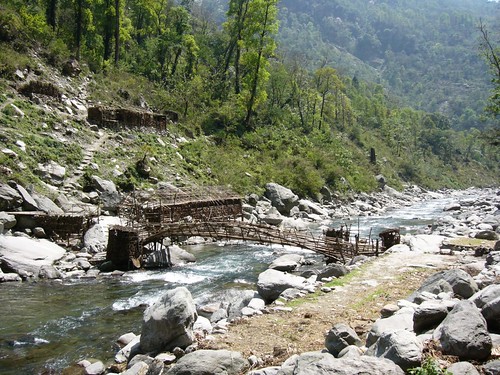
Another mentioned in the same document is Gangyap in Western Sikkim. Sometimes referenced as (possibly?) Tashiding, there are a few links.
 
spaceppl:
'Tashiding - Tattapani (HotSpring)'
The Himalayan Beacon (link lost to eternity), while expressing concerns about development in general and specifically hydro dams, mentions (Tholung) Kong(sa) hot spring:
'Dzongu contains a number of important sacred sites such as caves where Guru Rinpoche meditated, the Keshong Lake, the Kongsa hot springs, and the Tholung temple that is revered not merely by the Lepchas, but by all the Buddhists of Sikkim'.
Could it be just another name for Tarum? No (?), it is the same as Tholung Tsachu which is another hot spring along a trekking route, though less well known. 
Tholung is located in northern Sikkim and is home to a Tibetan monastery as well as the nearby hot springs.
Mayal Lyang homestay advises a trip here:
'Enjoy the serenity of the place and spend some time meditating. A traditional bamboo bridge from here takes you to a hot water spring. Spend some time soothing your tired limbs here'.
But it could also be referred to as Dzongu, as Dzongu primarily refers to the wider valley of such ... though the hot springs would be close to Tholung monastry.

I also note this:
'Lingdem Hot Spring: Near Kayeem-Lingdem, there is a hot spring with separate enclosures for males/ females. You can soak in the bubbling Sulphur water at a leisure'.
From some vague photo's it looks like a building has been built to house the springs. Could alsso be Lingden ....

Then there is the drilling for a hydro dam which resulted in the existence of a hot spring according to the Voice of Sikkim:
'In what could be a repeat of 1949, the Himagiri Power Project staff discovered hot-spring at the site where they were drilling rock, about 150 ft above Lingdem Road on September 10. .
...
Talking to media persons Zilla member of the area, Dubzor Lepcha and the local people informed that the same hot spring was discovered at the same place in the year 1949 but suddenly submerged after two years. “This year, this hot spring has suddenly emerged with drilling works being carried out at the same place,” they said'.
Just recently the Sikkim government has earmarked funds 
'... for development of Allied facilities for Lingdem Hot Spring, Upper Dzongu, North Sikkim'.
So what is now Lingdem hot spring?

Another soak is Khandum as blogged by Ugen Chopel Dorji:
'After about 2 hours drive we reached the place called Khandum Tshachu, which literally means Hot spring water of Goddesses. We all dropped by the nearby hot spring and just took a little patched washed as we did not have time to halt for the whole day'.
Soaking in Sikkim 
While trying to enjoy Sikkim's hot springs please take in the following [PDF file, but hey where did it go?]:
'The increase in human activities in the hot spring areas has lead to various ecological stresses. The people demand on the surrounding forests for firewood due to lack of alternative fuel. There is a lack of proper solid waste disposal as huge quantities of solid wastes are generated during peak season. Waste materials lie scattered along the surrounding huts and the river banks. The sanitary facilities available are unhygienic and insufficient as temporary toilets are constructed on the river bank where the faecal matter is directly discharged into the river without any treatment. The demand for meat and meat products had further accelerated the rate of fishing in the rivers. The large number of patients with various communicable diseases frequenting this hot spring may further spread these diseases. It is feared that due to the unhygienic conditions prevailing around these hot springs, the people on their way back may be infected by new diseases. The hot springs of Sikkim are regarded as places of worship and hold a high religious esteem in the hearts of the local people. The people drink the hot water and bathe in it, considering these factors detailed microbiological and radio-activity study of these water is felt essential taking into account, the study of the geomorphologic aspect of these hot springs and their economic exploitation'.
Happy soaking Sikkim!

Notes
[1] Thakur,N, S. Das, M.T. Sherpa, R. Ranjan (2013) GPS Mapping and Physical description of Polok, Borong and Reshi Tatopani - Hot springs of Sikkim. Journal of International Academic Research for Multidisciplinary, Impact Factor 1.393, ISSN: 2320-5083, Volume 1, Issue 10, November 2013.

Thursday, October 10, 2013

Chilime Tatopani, Nepal. Source

In hot water. Of Bulnai, Mongolia. Blogged by Costin.

 An instagram by tanqingju. Tibet's Dezhong hot spring

A family portrait:
'Le délice des sources chaudes tout nus'. 
Tsenkher, Mongolia. Source

Saturday, June 22, 2013

Enshrined

Hot pot
In the area to the northwest of Kathmandu, south of the Ganesh Himal and Manaslu, a few less well-known hot springs can be found.
 
Jharlang hot spring is to be found in the district of Dhading, not so far from from Kathmandu. Jharlang takes it name from the village with the same name. It's a day and a half walk from the district capital of Dhading Besi (source).

Further far away is the hot spring of Chalise (Charlise, Chalish). There is this discription:
'Today we will get rest in the village as we have long way up and down to and will have good communication but there are some sight visiting place called Tatopani where the hot spring. The pot is not very big but it is naturally hot. There are three pond at the same place will take 1:30 hours from the Chalise village'.
Could this be the hot spring:

Blue-green
In Gorkha district we learn (should be past tense: the link is broken! ... sigh) there are two hot springs:
'Tatopani hot water spring site (at 3,300ft) half an hour from Khorlabensi [Khola Besi], Machha Khola village hot spring on the other side of Bun [Buri] Gandaki'.
Both hot springs are located along the Budi Gandaki river. 

See the photo below by Mann Gurung, simply entitled 'Tatopani':

Hugolitonepal:
'That night we stop in a town called Tatopani, meaning “hot water”. The village is exploiting a nearby hot spring and that’s where it takes its name from. Before nightfall, I go down to the river. We have never been this close to Buri Gandaki. I find a nice spot on the rocks to sit and look at the blue-greenish alpine water. I stare at the patterns forming in whitewater, just fascinated for a moment. Before I know it, the sun has gone. Time for me to go as well'.
Me briefs on tatopani but walks faster than the first quote above:
'there is a small hot spring 20 min further'. 
There is though little info on the specific hot spring on the other side of Buri Gandaki. 

Possibly the same but possibly not, an art lover details:
'Just south of the town of Arughat, along the Buri Gandaki River in central Nepal there is a small hot spring which has been channelled into a public bath. Next to this bath are two small buildings which over the centuries were used as Buddhist and then Hindu shrines'.
Just so as not to confuse: Arughat hot spring near Arughat. Tatopani hot spring between Machha Khola and Khola Besi. Unless I have them mixed up ...


HOT spring in Tatopani from perfilov

Sunday, June 3, 2012

Soaking in Sikkim

Hot springs in Sikkim
Sikkim is a former independent country that has been part of the Republic of India since 1975. Besides the Indian state of West Bengal to the south, it borders Bhutan to the east, China to the north and Nepal to the west. Distinctly mountainous (it shares the world's third highest mountain peak with Nepal), situated on the south flank of the Himalaya, it's not surprising to find that it contains a number of hot springs.


Sikkim - A Travellers Guide by Arundhati Ray gives a short intro to hot springs in Sikkim (healthy) and has a couple of photo's which give us some insight into soaking couture (page 38/39).Two references list nine hot springs, though what follows are a few more. Possibly some duplication or some unlisted. Who knows?

Sweet
Legship in South Sikkim could well be the name of the first of a number of hot springs in Sikkim. Alternatively it's known as Reshi hot spring or  Phur Tsachu, there's no consensus on the right name. Legship itself is becoming more well known as it hosts a Shiva temple and is the site of a hydropower station.
The hot spring itself is
located outside of the town itself:
'Situated on the bank of River Rangeet is the hot spring 'Phur Tsa Chu', half an hour drive from Legship and one hour drive from  Jorethang. Pilgrims from all walks of life come to dip in this hot spring during the month of January to March'.
Put differently:
'Ideal spot for bird watching and butterflies. At 8 kms from Legship and 34 km from Ravangla towards Naya Bazaar on the banks of river Rangit, lies the popular hot sulphur springs. It's great medicinal values as well as religious importance attract many tourists and local devotees. The place is also important for two sacred caves Khandosangphu and Sharchog Begphu, where the great Buddhist Saint Padmashambhava is believed to have meditated during His journey to Tibet in 7th century'.
More revelations:
'It flaunts of a hot spring nearby, believed to hold medicinal powers, and footprint inscribed rocks which are attributed to that of the fairies. Lho [cave] Khandro- Sang Phug is said to be associated with the ‘God of Increasing Knowledge’'.

'Hot Spring Legship West Sikkim'.
Siniolchu Travels

Not everyone is however charmed by the hot springs. Experience 1:
'From Kechopari we took a jeep to Legship where there were "hot springs". After a long hike we discovered that these hot springs were a tiny dribble of water by a monestary along the Rangit river. Our dreams of swimming in warm water were dashed. Plus, i had been feeling a bit under the weather already and the smell of sulfer did me in. I spent most of Legship asleep in bed. Sweet sweet hotsprings'.
Experience 2:
'In Legship however things were not so wonderful. There were no rooms at the one hotel that was open. No problem, I could walk to the hot springs where there were huts. I asked around. The consensus, the hot springs don't get hot until DECEMBER. Dear Lonely Planet editiors, this might be something you want to include in your next edition'.
Let's hope they are paying attention in Melbourne ...
Experience 3:
'From Tashiding we went to Legship, a nowhere transit town, but we had a picturesque walk along the river to find the local natural hot springs. Compared to NZ, the hot springs are lukewarm and very shallow. But it was a cultural experience to be pressed firmly between 30 partially-naked, old, local women, and pampered with a mud treatment and constant scoops of hot water over parts of my body freezingly exposed by the shallow water'.
Experience 4:
'The Scorpio again came to halt at the Reshi Hot Springs (also know as Taatopaani in the local lingo). Well but before we could get to see the springs, we had to walk down some real steep steps, cross a creaky suspension bridge & then walk through another narrow path all the way to the banks of the Legship lake. Well once we reached the springs, we saw this small encircled area separated from the lake; that my friends, was were the water was hot.
There were plenty a people who were relaxing in the hot waters of Reshi; more were just flowing in getting out of their clothes in a whim; taking a dip. My personal thoughts were that though the area was pretty, it could be a tad better maintained'.
So to cap it off, the springs are disappointing, poorly maintained and full of old half naked women (sexist?). Raju completes the laments with
'Firstly there is a near vertiginous climb down a narrow flight of steps. Then we had to cross a worn out suspension bridge over the crystal clear river water. Walk for about 200 metres to reach the spot of hot springs. It is a very small pool of water just above the main flow of the river. Hot water overflows from this pool into the river. It was so full of people that we lost the interest of dipping in it'.
The following is a more balanced article:
'It just takes a one hour ride to reach Legship form Jorethang , which is famous for its hot water spring [Tatopani]. On the way to Legship, one can see a board put up wherein it is written Tatopani Bhir. Just on the bank o the river Teesta, there is a 20 x 20 square foot hot water spring. The water is bounded with two steep hills [Bhir], Sanghanath and Miyong hills.
The Legship hot water spring is known for its medicinal proprieties for healing different ailments like chronic skin disease, bronchitis and hearing ailments. The hot water spring is also worshipped by the people and there is a mythical belief that if people with any desire for something here then that is definitely fulfilled, so people come here to fulfill their long pending wishes from far off places like Nepal, Bhutan and the neighbourings states like Assam, Nagaland, Bihar. The pilgrims generally come to the hot water spring in the month of April to November, every yea. More than six thousand people throng here which then turns into a mela. Most of the pilgrims stay at the hot water spring for about a week. The people are allowed to take a bath in tow batches of males and females at a time. Every group is allowed to have a bath for two hours. The Chowkidars [overseeers] that have been appointed by the Tourism Department see to that every thing goes according to order and in time. The department has also built one resting shed with attached bathroom for the pilgrims. The department is also building eco-huts, which is under construction. The eco-huts will provide makeshift lodges for the pilgrims, during their stay at the hot water spring. The six months during which the pilgrims come to the hot water spring gives the local villagers a chance to earn some money by doing various business, along with giving the village the feeling of holding a ‘village fair’'.
Source: The Mail, dated: 10th September 2007.

Furthermore there is one youtube vid.

Impressed
The above is probably the most well-known of Sikkim's soak. Less well-known are what follows.
Situated close to both the Tibetan and Bhutanese borders it is often referred to by the Bhutanese name for hot springs, tsachu which is mentioned after the location: 
Yumthang Tsachu. Besides it being the location of a hot spring, Yumthang (and the valley in where it is located) is known as the 'enchanted valley of flowers', the flowers sprouting from the alpine meadows and extensive rhododendron forests. The fame of the former is such that the governments organized the International Rhododendron Festival 2010 here.
The hot spring:
'At an altitude of 12,000 ft, 135 km from Gangtok in North Sikkim, a few hundred metres off the road, after crossing river Lachung over a wooden bridge lies a small hut which houses a pool where sulphur water of hotspring is collected for taking a dip'. (source)
Or
'For the convenience of bathers, there is a hut with two pools which contains hot spring water. Hot water rich in sulphuretted hydrogen gas from a spring just behind the hut and is diverted to the pools' (source).

P2061024 Hot water spring, aka "Taato Paani" in Yumthang.
First hand reports often are tepid in their appreciation, others seem more honest as you might agree with after a look at the picture above.
'we wind up at a much advertised and highly unappealing hot spring which is basically a tiny cement ditch containing hot spring water enclosed in a dark and dingy hut (luckily my lonely planet guide had prepared me for this). silla from iceland, the land of beautiful hot springs is very impressed! haha!'
Haha indeed. Welcome to Asia. Sikkim Times (9 October 2009) adds that the facilities will be improved.
Another first hand experience (2010):
'An hour further north and we got to Zero Point, the end of the road, with the hot springs renowned for their medical properties. There are some families that come to hot springs every year for about 2-4 weeks. They sit down in the hot water few times a day, cook and mostly sleep and relax in a hut. They believe that this is the best cure not only to have a beautiful skin but also for any physical problem. They were so hospitable. They made tea for us that warmed our cold body (some people from our group jumped into the hot pool but next day, all of them had a cold:)'.
Yumthang, wikipedia reports, is not year round reachable, during the winter the road there is often closed due to snow fall.

Yumesamdong (or Momay Samdong) is located just up the valley from Yumthang (25 km). There are reputed to be more than 10 hot springs closeby. As it's pretty remote and rugged (snow more or less year round), not much is known about the springs in this area. One can get a first hand report of a trip to Yume Samdong. Beware though, in 2009 tourists died when a rock smashed their car, the Sikkim Times reports.

The photo is from a short blog entry by helena and jakob while visiting Yumesandong.
They also have a reference to Rinjink hot spring, not substantiated anywhere else.

Murder
Sikkimtour.net has good information on the close to each hot springs of  Borong and Ralang in South Bhutan:
'Borong and Ralong hot water springs are located within a distance of 7 kms from each other. Popular with visitors from all over the region, these natural spas are said to have strong curative powers. Ralang Cha-chu [or Tsachu] can be reached after an hour long walk from Ralong monastery while Borang Cha-chu is reached after a 7 km drive to Ralong and then a 40 min walk downhill'.
Ralang hot spring is, you might have noticed, above often referred to as Ralong, but it seems Ralang is the most often used. Ralang, like Borong, is apparently very beautiful and Ralang is also home to a Buddhist monastery. The hot spring played an important part in Sikkim's history when in the 18th century the Sikkim ruler was murdered here.

Finding it, is not straight forward Adrian shares with us:
'then set off for a nearby hot spring, that I understood to be 1-2 km away. ... It wasn't... I'm not quite sure how I got this so wrong, but I'd estimate in the end I walked about 10 miles up and down a very steep hill, having neglected to take any water with me. ... The hot spring was a small pool containing water that was quite hot, however by this point hot; undrinkable water was not really the sort I was after. So after a brief rest we [Adrian and a dog] set off back up the hill, which really was very steep'.
More experiences:
'Eventually the jeep came to a stop and when we asked where the hot springs where they told us that they were closed because it was low season... it was incredible how not one person gave us this important piece of information... we would have really taken it into consideration'.
Tops
Tarum is a northern Sikkim hot spring which forms part of multi-day trek. Photo's and this description from Lachen's website, a website which has ceased to exist:
'A little beyond the hut [which is Tarum] after crossing the stream there are two hot springs where one can have a relaxing dip. The one on top is being the hotter of the two is considered as the male and the lower one as the female. As per tradition one must always enter the female pond on the top before entering the male one'.
Pirane adds this great blog entry:
'All of a sudden we reach into an opening from where we can see a small house, our residence for the night. It’s a small basic structure with two rooms, a kitchen and a bathroom, as one room is already occupied by two elderly Lepchas [local ethnicity] we make ourselves comfortable in the adjoining one. We take appreciative gulps of piping hot tea to warm our damp bodies. Very quickly we strip ourselves of our wet clothes to immerse our bodies in the female pond. Male and female, that’s the term the locals have given to the two sulphur ponds, the cooler one being the female and the hotter one the male. The locals believe that one should first enter into the female pond before going to the male pond, the reason for which I really did not know but logically it made sense as the male pond was so hot that it made me yelp as I dip my foot in. Nima and myself were thoroughly enjoying as we sit there chatting for more than an hour, coming out occasionally to escape the dizziness from the sulphur fumes'.
The following photo ('male pond') is also from this blog. Looks great.


That's what Carsten Nebel reports as well:
'The walk through overgrown trails in the hot morning makes it hard to enjoy the hot spring in Tsarum at first. But after a rinse in the cold creek, it feels wonderful to sit under the pipes with hot water. Unlike other hot springs, this one is kept very clean, is visited by few people and the water doesn't even smell bad. It's definitely one of the top-3 hot springs in the Himalayas'.
Serene
Possibly unknown but only to geological insiders [PDF] is Zee hot spring in northern Sikkim, though it was also listed in this list on sikkimonline.info.
References also list Shagyong (source), again in northern Sikkim. 

Another mentioned is Gangyap in Western Sikkim. Sometimes referenced as (possibly?) Tashiding, there are a few links.
'Tashiding - Tattapani (Hot Spring)'
Then again here is another link to another possible claim.

The Himalayan Beacon (link lost to eternity), while expressing concerns about development in general and specifically hydro dams, mentions (Tholung) Kongsa hot spring:
'Dzongu contains a number of important sacred sites such as caves where Guru Rinpoche meditated, the Keshong Lake, the Kongsa hot springs, and the Tholung temple that is revered not merely by the Lepchas, but by all the Buddhists of Sikkim'.
Could it be just another name for Tarum? No (?), it is the same as Tholung Tsachu which is another hot spring along a trekking route, though less well known. Tholung is located in northern Sikkim and is home to a Tibetan monastery as well as the nearby hot springs.
Mayal Lyang homestay advises a trip here:
'Enjoy the serenity of the place and spend some time meditating. A traditional bamboo bridge from here takes you to a hot water spring. Spend some time soothing your tired limbs here'.
Another soak is Khandum as blogged by Ugen Chopel Dorji:
'After about 2 hours drive we reached the place called Khandum Tshachu, which literally means Hot spring water of Goddesses. We all dropped by the nearby hot spring and just took a little patched washed as we did not have time to halt for the whole day'.
Drilling
Finally, there is the drilling for a hydro dam which resulted in the existence of a hot spring according to the Voice of Sikkim:

'In what could be a repeat of 1949, the Himagiri Power Project staff discovered hot-spring at the site where they were drilling rock, about 150 ft above Lingdem Road on September 10. .
..
Talking to media persons Zilla member of the area, Dubzor Lepcha and the local people informed that the same hot spring was discovered at the same place in the year 1949 but suddenly submerged after two years. “This year, this hot spring has suddenly emerged with drilling works being carried out at the same place,” they said'.
Just recently the Sikkim government has earmarked funds 
'for development of Allied facilities for Lingdem Hot Spring, Upper Dzongu, North Sikkim'.
Soaking in Sikkim 
While trying to enjoy Sikkim's hot springs please take in the following [PDF]:
'The increase in human activities in the hot spring areas has lead to various ecological stresses. The people demand on the surrounding forests for firewood due to lack of alternative fuel. There is a lack of proper solid waste disposal as huge quantities of solid wastes are generated during peak season. Waste materials lie scattered along the surrounding huts and the river banks. The sanitary facilities available are unhygienic and insufficient as temporary toilets are constructed on the river bank where the faecal matter is directly discharged into the river without any treatment. The demand for meat and meat products had further accelerated the rate of fishing in the rivers. The large number of patients with various communicable diseases frequenting this hot spring may further spread these diseases. It is feared that due to the unhygienic conditions prevailing around these hot springs, the people on their way back may be infected by new diseases. The hot springs of Sikkim are regarded as places of worship and hold a high religious esteem in the hearts of the local people. The people drink the hot water and bathe in it, considering these factors detailed microbiological and radio-activity study of these water is felt essential taking into account, the study of the geomorphologic aspect of these hot springs and their economic exploitation'.
Happy soaking Sikkim!

Wednesday, December 14, 2011

Mountainous dress code. Bliss?

Chilime hot spring by RP

Low walls
On the road to Tibet (northeast of Kathmandu) lies Kodari which is the last village before crossing the bridge to China. Note that the persons on the other side of the river are nearly 3 hours ahead of the Nepali, forcing them to get up and get to work in the pitch dark.


Anyway, Kodari is basically a 2 km long village with houses and buildings along the road and squeezed between the road and the river. 

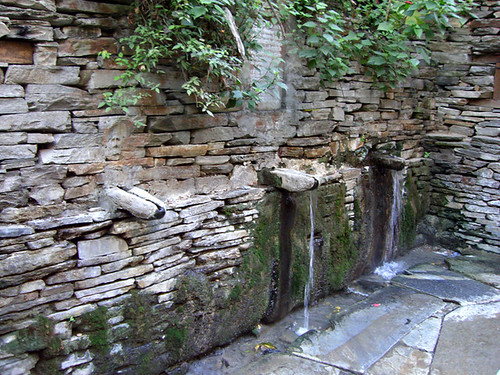
The hot springs themselves are far from a delite. More like a hot shower in a damp and dark room. Then again, they are easily accessible and during the winter, Nepali flock here to take the waters, so who am I to complain?
Rough Guide's has an extensive guide on this hot spring:
'The signposted hot springs are at the northern end of the village, down steps towards the river. A hot tub it's not: the water splashes out of pipes into a concrete pool and is used strictly for washing'.
Yusuf Abdol Hamid has an extensive write up on the Tatopani, published by ECS Nepal. One observation:
'Separated by a low concrete partition are the male and female showers, where sprightly colored lion heads spout the spring water between their fanged teeth. A word of caution: despite Nepal’s conservative trappings, it’s not uncommon to witness gratuitous displays of female nudity, mostly amongst the older women who occasionally stray inadvertantly into the male showers'.
Below is a picture to the article, welcoming?


Closeby to Kodari is the Last Resort, an action laden resort for the not so faint-hearted. But a great place to stay.
Exaggerating
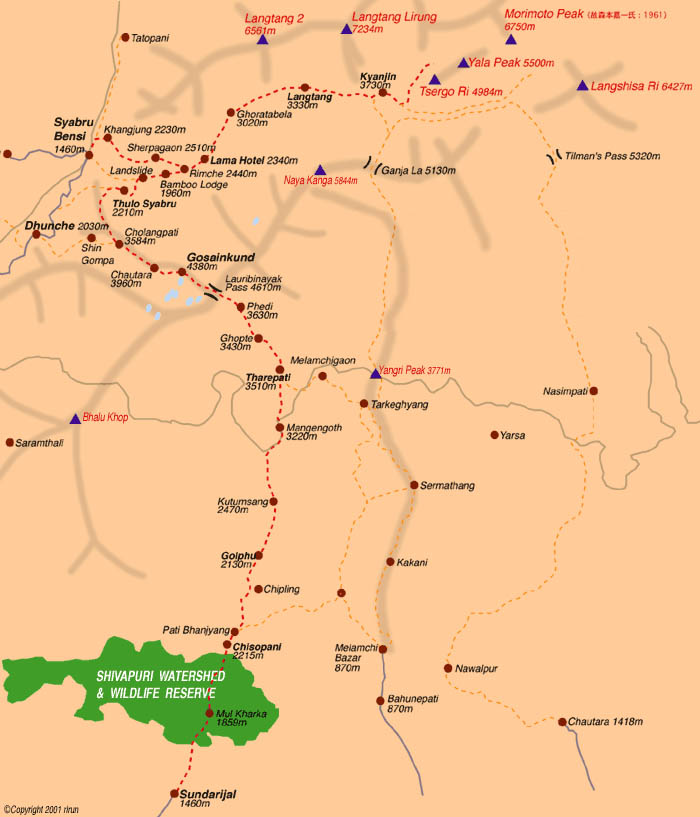
Directly north of Kathmandu up and along the Trisuli river lies the district of Rasuwa and towns such as Dhunche and Syabrubesi, gateways to the Langtang National Park and Gosaikunda, a holy mountain lake.

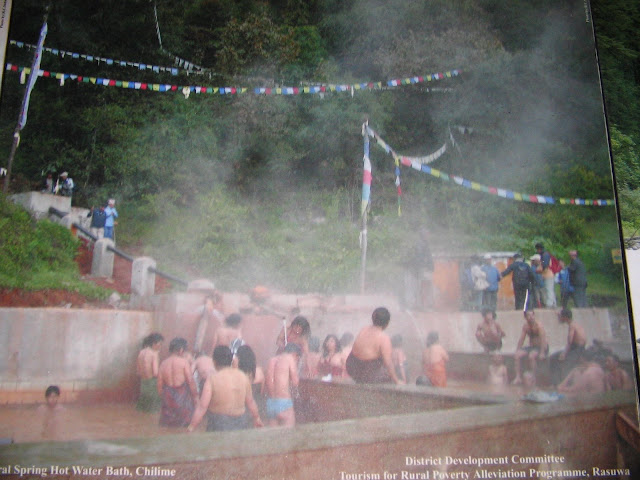
Lately treks (Tamang Heritage Trail) are also heading westwards and are incorporating a hot spring Chilime, though it's also referred to as Tatopani (hot water). Possibly the largest in Nepal?
 

I visited Chilime back in 2001, it's a full days walk up the mountain side. From current pictures I deduce that at least the springs themselves have not changed.
'In Tatopani hot springs await you. The thermal baths are known for their health-giving properties for a variety of illnesses. Local people stay here for one week and longer. Please wear Nepali style bathing suits (ankle-length skirts for women, shorts for me'
is what Franziskadoswald adds. Do note that Nepali style bathing suits are pretty much non-existent, so much for the advice.

Local bathing customs? Photo published by Travel to Care

A Carpetbagger's Tale has her own experience:
'Changing into boxers and t-shirts, we gathered our towels and flip flops and walked to the hot spring. The three square-shaped pools were each filled with murky, brownish water, and a thin sheen of what looked like oil coated the water like skin. We got in. For an hour, we sat in the hot water, enjoying the warmth and steam. In the pool next to ours, a dozen women were lounging, wearing red sarongs that bared their shoulders but covered them to their knees. On their heads, they'd wrapped up their hair in plastic bags. Some of the women were Buddhist nuns, and their closely shaved hair and red bathing robes seemed out of place in the steam. The men in our pool and the pool to the other side had hairstyles that we've seen on some of the saddhus - a close crop with a tuft of hair at the crown in the back. They have a piece of string tied under their armpit like a shoulder bag with no bag and another tied around their waist. After a while, two very old Tamang women approached the pools. Dressed in their traditional long wrap dress, woolen tunic, top hat, and fabric belts, they took their time de-layering. Although our guide book had warned us to dress modestly at the pools, it seemed like maybe it wasn't as big of a deal as they had thought. These two very old, very wrinkled women were completely topless, and they wrapped their impossibly long braids around their heads like a crown before they walked into the water and stood under the fountains'.
Back in the nineties, there were no guesthouses, just a couple of huts to overnight in and hardly any other facilities. That seems to have changed, luckily. It was (and probably still is) quite out of the way and attracts mostly Nepali soakers. Do note this late 2012 newssnippet (Nepalireporter):
'Tourists have also started staying longer at the Tatopani which has further boosted tourism in the area. There are more than 10 hotels and lodges in Tatopani area'.

'Early morning, at the height of 2500 meters, in december, it is cool but hot springs are very hot. The next trekking trip at Tatopani, with yoga and hot bath will be in March 2009'.

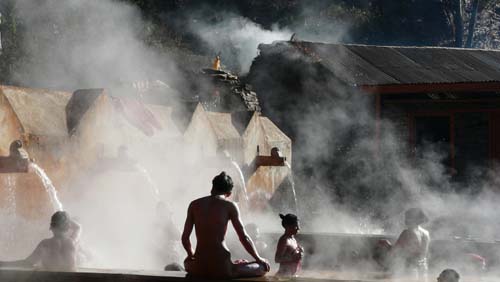
Eric Lon and Chilime hot spring. Note the (un)dress code.

Another recent experience by Niraj Karki and published by ECS Nepal (website down) sings the charms of Chilime Tatopani:

'When we went there that fine rainy day in August, it was absolutely empty – we had a whole lodge to ourselves for which we (group of four) paid 300 rupees. The local alcohol made from fermented millet was 30 rupees for a bottle and we had the hot spring all to ourselves. I am in no way exaggerating when I say that Tatopani has been till now one of the best experiences of my life. In fact, I cannot do it justice, which is why I will not describe the sensation. It is a personal experience for everyone. I will describe the setting, and leave your mind to imagine and for yourself to discover. Imagine if you can the feeling of finding an oasis in the desert after a hard day in the sun. It’s like that reaching this place after a hike in the cold rain - the feeling of being in hot spring in a light drizzle of rain - your body placed in the melt of two extremes - the coolness of the falling rain meeting the warmth of the burning hot water, amidst a quiet, calm, tranquil surrounding bathed in a sea of mist'.
Not all hallelujah. Rameshwar Khadka reports (oh blog post gone ..., originally from 2011; oh no, originally it is from 2010 and not from wordpress but on blogger!) on a visit by the Eco Himal team to Chilime. He notes:
'The Hot spring Management Committee is responsible for managing the hot spring in Tatopani. The committee charges rupees 10 for each Nepali and rupees 50 for each foreigners to take bath in the hot spring. TRPAP constructed two pools and taps to manage the hot water. The tap for natural spring water and public toilet were also constructed. However, they are not functioning well. The team made enquiry about the natural spring water tap. The local people replied that there is a dispute in using the water in the locality. Similarly the public toilet was very dirty and it was not functioning well as there was no water supply'.
Another picture from MTB Kathmandu

Awesome

At the foot of the trek to Chilime lies a lesser known hot springs. Syabrubesi (Wikipedia contends it's Syafru-besi), one of the main towns in the area, has it's own hot spring, nearby the river. More scientific info has been published on this hot spring.

 
'Bathing in the hot springs - Syabrubesi'

The Syabrubesi tourist information adds awesome surroundings as a component of this hot spring as well as listing that the bi-carbonate sulfate spring waters are hotter than 40 degree centigrade.

Then in Langtang valley, near Landslide Lodge (slash hotel) is another hot spring, relatively unknown.
It's not so far from Syabrubesi, though the spring itself is apparently located on the other side of the Langtang river and as such unreachable to tourists. Sources describe this as
'... a small hot spring on the opposite river bank at 1810 meter'.
Into thin air does manage to find this hot spring and posts his photo (with low resolution):
'On the way down we discovered these Hot Springs -- Bliss !!!!! '
Then there is most probably a hot spring half a days walk north of Syabrubesi into the restricted area of Rasuwagadi. Unfortunately my only proof of this is a map with a Tatopani due north. Possibly it could well be the hot spring of Syabrubesi itself. 

[update June 2013]